
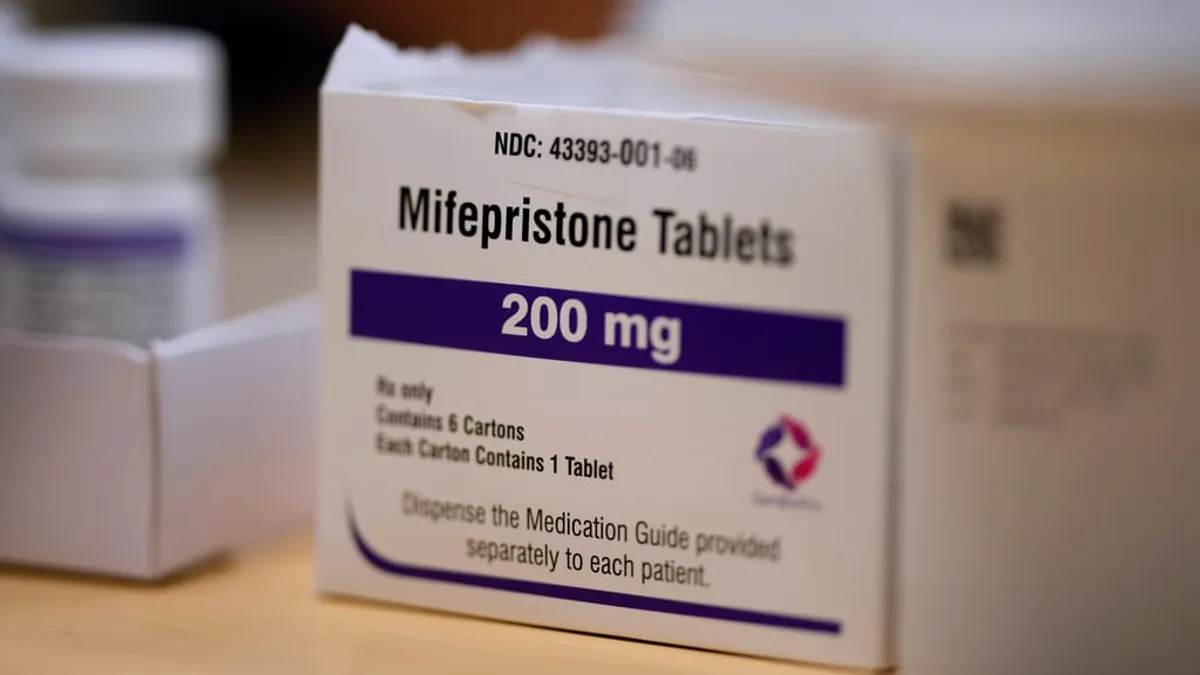
Supreme Court Restores Access to Mifepristone Amid Ongoing Legal Battle
📋 Key Takeaway: The U.S. Supreme Court has temporarily restored access to the abortion pill mifepristone, blocking a lower court ruling that imposed new restrictions on its distribution.
Supreme Court’s Temporary Order on Mifepristone
The U.S. Supreme Court issued a significant ruling on Monday, temporarily restoring broad access to mifepristone, a key medication used in abortions. This decision blocks a recent lower court ruling that threatened to dramatically limit the availability of the drug, which has been a primary method for terminating pregnancies in the United States.
Justice Samuel Alito signed the order, allowing women to obtain mifepristone through pharmacies or by mail without the requirement of an in-person consultation with a physician. This ruling will remain in effect for at least another week while both parties prepare their responses and the Court examines the matter more comprehensively.
Impact of Mifepristone on Abortion Access
Mifepristone is utilized in the majority of abortions across the U.S., where medication-based procedures have become increasingly common. Following the Supreme Court’s 2022 decision to overturn Roe v. Wade, many states led by Republican lawmakers have enacted strict abortion bans. However, some Democratic-led states have implemented laws to protect telehealth prescriptions for mifepristone, allowing women in restrictive states to access the medication.
Recent reports indicate that in states where abortion is banned, more women opted for telehealth prescriptions of mifepristone than traveled to other states for procedures. This highlights the growing trend of utilizing medication over surgical methods, particularly in the face of increasing restrictions.
Legal Challenges and Telehealth Practices
The legal battle surrounding mifepristone intensified when Louisiana initiated a lawsuit aimed at overturning the Food and Drug Administration’s (FDA) guidelines on prescribing the medication. The suit argues that the FDA’s regulations undermine the state’s abortion ban and raises questions about the drug’s safety, despite its long-standing approval and endorsement from FDA scientists.
Mifepristone is typically administered alongside misoprostol, which completes a medical abortion with a reported effectiveness of 97.4%. Misoprostol is also used independently in some regions where mifepristone is unavailable, although it has not received formal FDA approval for this purpose.
Continued Access Amidst Uncertainty
Despite the uncertainty surrounding mifepristone’s availability, organizations providing telehealth abortion services have adapted quickly. Some have switched to offering misoprostol only, a regimen that may lead to longer-lasting side effects. Dr. Angel Foster, founder of The Massachusetts Abortion Access Project, confirmed that her organization was prepared to send misoprostol alone but reverted to the two-drug combination following the Supreme Court’s ruling.
The ruling provides a temporary reprieve for patients and healthcare providers, allowing them more time to navigate the shifting landscape of abortion access. Legal experts emphasize that regardless of the ongoing court battles, women will not face criminal charges for seeking abortions.
Ongoing Legal and Social Implications
Anti-abortion advocates have pledged to continue their legal efforts, expressing concerns over the safety of mifepristone and criticizing the FDA’s recent regulatory decisions. Louisiana Attorney General Liz Murrill, who spearheaded the lawsuit against the FDA, criticized pharmaceutical companies involved in the case, suggesting that their financial interests are prioritized over patient safety.
As the legal proceedings unfold, the Supreme Court’s temporary order underscores the contentious nature of abortion access in the U.S. and the ongoing struggle between state regulations and federal guidelines.
Frequently Asked Questions
What is mifepristone?
Mifepristone is a medication used in combination with misoprostol to terminate pregnancies.
How does the Supreme Court ruling affect abortion access?
The ruling temporarily restores access to mifepristone, allowing its distribution through pharmacies and mail without in-person doctor visits.
What are the legal challenges surrounding mifepristone?
Legal challenges focus on state laws restricting abortion and the FDA’s regulations on mifepristone prescribing.
Can misoprostol be used alone for abortions?
Yes, misoprostol can be used alone, although it has not been formally approved by the FDA for this purpose.
What are the implications of the ongoing legal battle?
The ongoing legal battle may affect access to abortion medications and the regulatory landscape for reproductive health in the U.S.