France Calls for Global Action to Reduce Methane Emissions
📋 Key Takeaway: During an international conference, France urged global cooperation to address high methane emissions, which are a significant contributor to climate change.
International Conference Highlights Urgent Need for Action
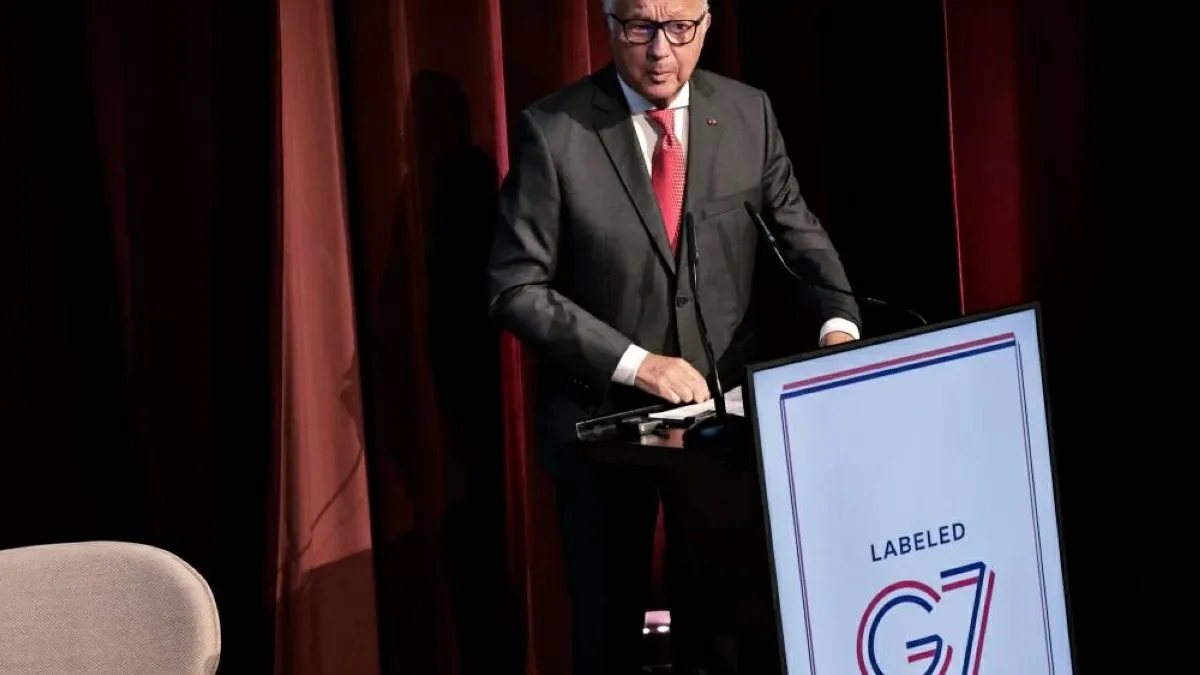
France convened an international conference on Monday, calling for a unified global effort to reduce methane emissions, a potent greenhouse gas that significantly accelerates climate change. According to the International Energy Agency (IEA), methane emissions remain at ‘extremely high’ levels, necessitating immediate and effective solutions. The conference, held under France’s G7 presidency, brought together ministers, economic and financial leaders, and scientists, all focused on accelerating the implementation of viable strategies to curb methane emissions.
French Minister for Ecological Transition Monique Barbaux emphasized the collaborative nature of the challenge, stating, ‘This is not an individual battle; no one can win it alone.’ She highlighted the necessity for broad participation from various stakeholders, including public and private sectors, governments, companies, investors, and scientists, to achieve meaningful progress in reducing methane emissions.
The IEA has warned that methane emissions associated with fossil fuels continue to be alarmingly high, indicating that capturing these emissions could release significant amounts of gas into markets that are currently under pressure due to ongoing geopolitical tensions, particularly in the Middle East.
Current Methane Emission Statistics and Sources
In 2025, fossil fuel production, including oil, coal, and gas, is projected to account for 35% of human-related methane emissions, estimated at around 124 million tons, according to the IEA’s annual report titled ‘Global Methane Index.’ Methane, an odorless and invisible gas, is primarily composed of natural gas and is released from pipelines, livestock farms, and landfills. Globally, approximately 580 million tons of methane emissions are released annually, with 60% attributed to human activities, particularly agriculture, followed by energy production.
Methane has a much greater warming potential than carbon dioxide, responsible for about 30% of the increase in global temperatures since the industrial revolution. However, due to its shorter atmospheric lifespan, reducing methane emissions can yield ‘significant short-term climate benefits,’ according to the IEA.
Despite a slight increase in fossil fuel-related emissions, which reached 121 million tons in 2024, levels remain close to the record high set in 2019. The IEA reports no signs of a decline in global methane emissions associated with energy by 2025, despite commitments from around 100 countries, including EU nations and the United States, to reduce methane emissions made in 2021.
Potential Solutions and Future Outlook
Minister Barbaux reiterated France’s commitment to encouraging companies to enhance their efforts in this area. In the oil and gas sector, methane escapes occur through leaks in valves and pipelines, direct venting into the atmosphere, or inefficient burning of gas at facilities. Proven solutions, such as leak detection and repair or stopping flaring, could prevent 30% of emissions from fossil fuel activities ‘at no cost,’ as the recovered gas can be sold.
The IEA notes that recovering this wasted gas could significantly bolster energy security, which has faced severe tests during the Middle Eastern conflict, potentially supplying markets with 200 billion cubic meters of gas annually. Although implementation may take time, the IEA estimates that up to 15 billion cubic meters could be quickly released.
The 200 billion cubic meters figure represents double the annual flow through the strategically important Strait of Hormuz, which has been closed since the onset of the conflict. However, the IEA also highlights that most countries that signed the global methane pledge, around 100 in total, have yet to take substantial action. Current policies aim to reduce oil and gas emissions by 20% by 2030, falling short of the broader economic target of a 30% reduction compared to 2020 levels.
Frequently Asked Questions
What is methane and why is it significant?
Methane is a potent greenhouse gas that contributes significantly to climate change, with a warming potential much greater than carbon dioxide.
What are the main sources of methane emissions?
The primary sources of methane emissions include fossil fuel production, agriculture, and waste management.
What measures can be taken to reduce methane emissions?
Effective measures include leak detection and repair, stopping flaring, and improving efficiency in fossil fuel production.
How can reducing methane emissions impact climate change?
Reducing methane emissions can yield significant short-term climate benefits due to its shorter atmospheric lifespan compared to carbon dioxide.
What is the current status of global methane emission reduction efforts?
Despite commitments from around 100 countries, there has been little substantial action, with current policies aiming for a 20% reduction by 2030.