
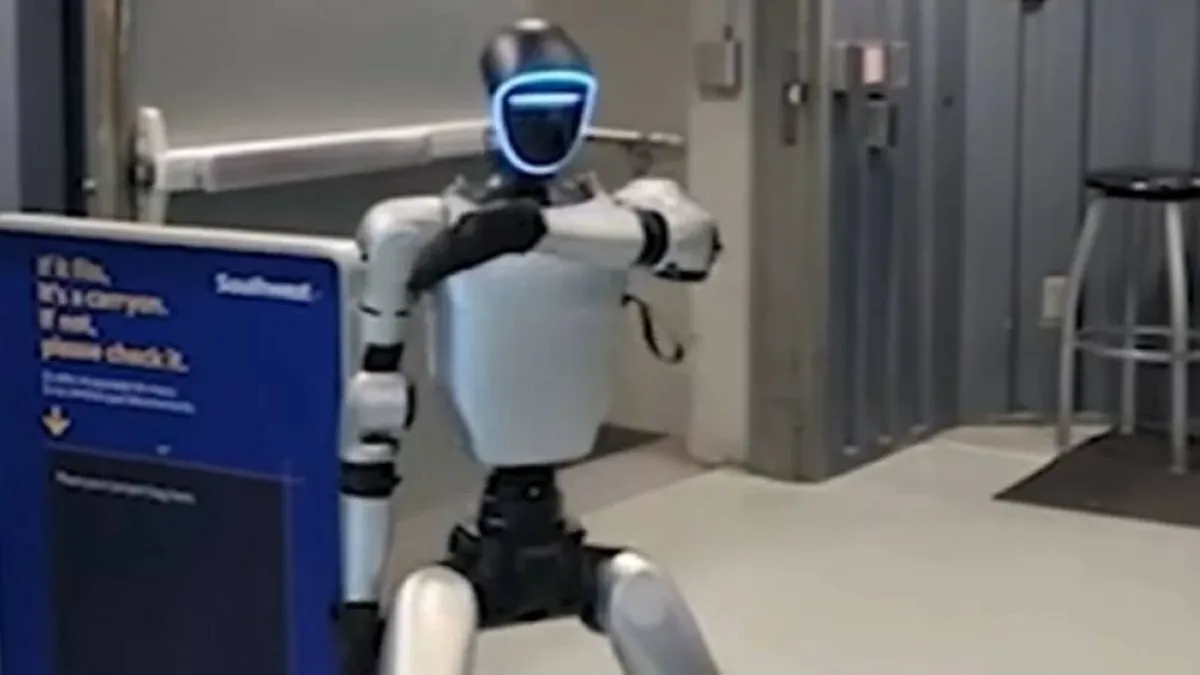
Humanoid Robot Delays Southwest Flight Due to Battery Concerns
📋 Key Takeaway: A humanoid robot named ‘Bebop’ delayed a Southwest Airlines flight for an hour at Oakland Airport due to safety concerns over its lithium batteries.
Robot Delays Southwest Airlines Flight
A humanoid robot named ‘Bebop’ caused a significant delay to a Southwest Airlines flight at Oakland International Airport, resulting in a one-hour hold-up. The incident arose from security concerns regarding the large lithium batteries that power the 32-kilogram robot, which was en route to a business event in San Diego.
The airline raised objections primarily concerning the robot’s battery capacity, which exceeded the international limit of 160 watt-hours for transport in passenger cabins. This limit is in place due to the potential risks of thermal runaway and difficult-to-extinguish fires that can occur in-flight.
As a result of these concerns, both the aircraft crew and ground staff had to coordinate with airport security to remove and confiscate the batteries, prolonging the aircraft’s stay on the tarmac. During this unexpected delay, Bebop entertained passengers with an impromptu performance, alleviating some of the tension caused by the wait.
Response from Robotics Company
Eli Ben Abraham, a representative from Elite Event Robotics, the company that owns Bebop, confirmed that the team faced extensive questioning regarding the type and operation of the batteries. He noted that they are currently working to retrieve the confiscated batteries and arrange for their expedited shipping to ensure they arrive in time for the upcoming event in Chicago.
Despite this incident, the team remains optimistic about future air travel for Bebop. They emphasized that with its current weight of under 45 kilograms, the robot’s transport through airport terminals will be manageable, provided that regulations for transporting large batteries as cargo are followed.
Frequently Asked Questions
What caused the flight delay at Oakland Airport?
The delay was caused by security concerns regarding the lithium batteries powering the humanoid robot Bebop.
What are the battery capacity restrictions for air travel?
The international limit for battery capacity in passenger cabins is 160 watt-hours due to safety risks.
How did passengers react during the delay?
Bebop entertained the passengers with an impromptu performance, which helped ease the tension during the delay.
What measures are being taken regarding the confiscated batteries?
Elite Event Robotics is working to retrieve the confiscated batteries and arrange for their expedited shipping.
Will Bebop travel by air again in the future?
Yes, the team plans for Bebop to continue air travel while adhering to regulations regarding battery transport.