Galapagos Tomato Species Exhibits Reverse Evolutionary Traits
📋 Key Takeaway: A wild tomato species in the Galapagos Islands is exhibiting traits reminiscent of its ancestors, suggesting a phenomenon known as reverse evolution, according to recent research.
Discovery of Unique Tomato Traits in Galapagos
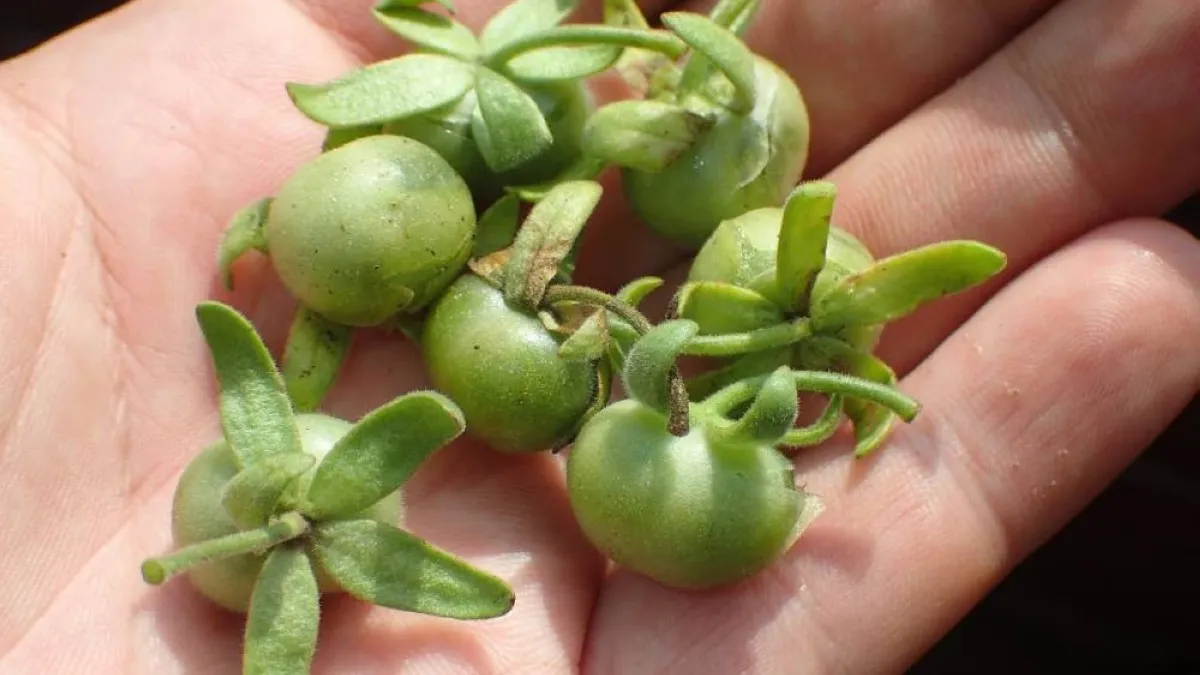
Hundreds of miles from Ecuador’s shores, researchers have made a groundbreaking discovery regarding a wild tomato species, Solanum pennellii, in the Galapagos Islands. First noted in 2024 during a study on alkaloids—natural compounds that act as insecticides—the species has drawn attention for its unusual characteristics. The findings reveal that the western islands’ tomatoes produce compounds not seen in their relatives for millions of years.
While analyzing tomato samples from the region, scientists observed that the western islands’ plants displayed traits that suggest a form of evolutionary regression. By comparing these specimens with those from the older eastern islands, researchers found that the latter possessed a more modern defense system. This indicates that the younger western tomatoes are not lagging in evolutionary development but rather may be reverting to ancestral traits.
Genetic Analysis Reveals Ancestral Connections
The tomatoes from the western islands exhibit a striking appearance, leaning towards a purplish hue with dark veins, distinguishing them from the typically vibrant colors of modern tomatoes. This visual difference served as an initial clue for scientists investigating the genetic makeup of the plants. Adam Jozwik from the University of California, Riverside, noted that environmental conditions might have exerted pressure on these tomatoes to revert to their original or ancestral state.
Through the analysis of over 30 tomato samples, researchers identified a molecular fingerprint in the western tomatoes resembling that of eggplants, which share a common ancestor with tomatoes. Interestingly, modern potatoes evolved from a wild tomato species approximately nine million years ago. While contemporary tomatoes ceased producing eggplant alkaloids, those in the Galapagos Islands appear to have reactivated this gene from their ancient genetic archive.
Implications of Reverse Evolution in Agriculture and Genetics
The research team did not stop at observation; they conducted genetic modifications on tobacco plants to replicate the ancient compound production, confirming that the dormant gene had not been lost but was waiting for the right conditions to emerge. The origins of Solanum pennellii trace back to South America, likely reaching the Galapagos Islands via birds carrying seeds one to two million years ago. While the exact timing remains uncertain, it is believed that the plant’s evolution occurred within the last half million years, coinciding with the emergence of the newer islands due to volcanic activity.
Researchers argue that this evolutionary regression is not merely a scientific curiosity but could be pivotal for developing more resilient crops capable of resisting diseases without heavy reliance on chemical pesticides. This discovery raises significant questions about genetic resilience in other organisms, including humans, and how dormant genes in our biological archives might be reactivated to address urgent environmental challenges.
Frequently Asked Questions
What is reverse evolution?
Reverse evolution refers to the phenomenon where a species reverts to ancestral traits, as seen in the Galapagos tomato.
How did researchers discover the unique traits of the Galapagos tomato?
The traits were discovered during a study on alkaloids, revealing unexpected characteristics in the tomato species.
What are the potential agricultural implications of this research?
The findings could lead to the development of more resilient crops that require fewer chemical pesticides.
How does this research challenge existing evolutionary theories?
It challenges Dollo’s Law, which states that lost traits cannot be regained in the same form, suggesting evolution may not always be linear.
What other species might exhibit similar genetic resilience?
The research raises questions about genetic resilience in various organisms, potentially including humans.