
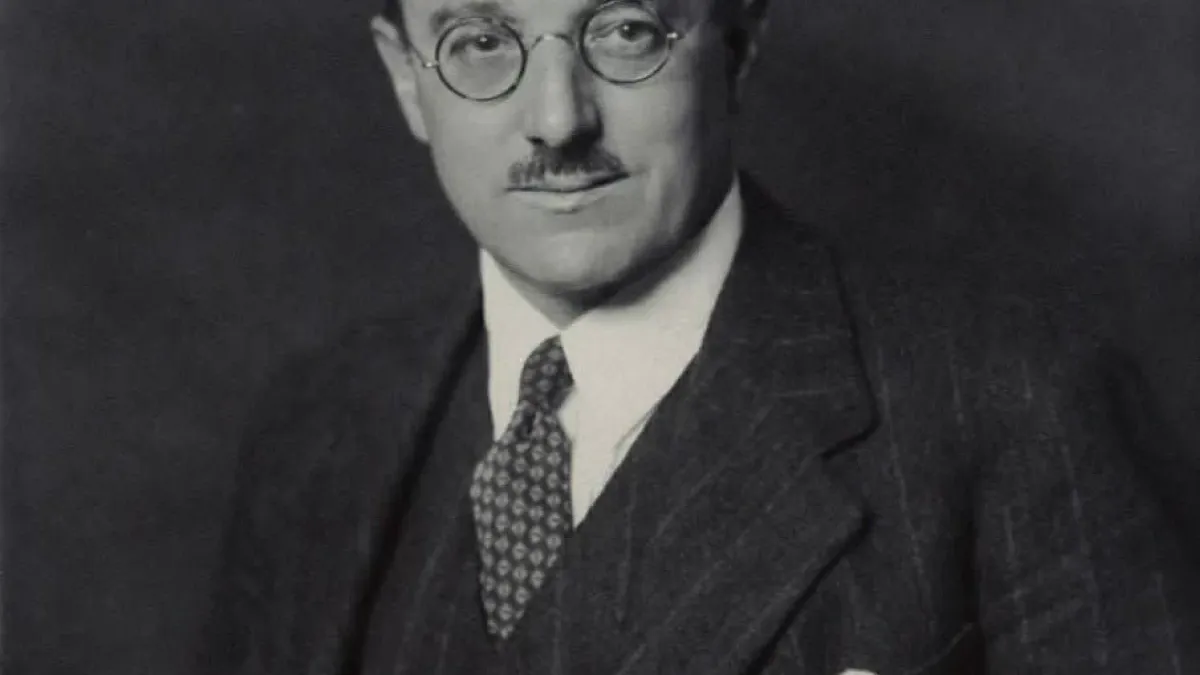
Robin George Collingwood’s Book Maps Human Knowledge Evolution
📋 Key Takeaway: Robin George Collingwood’s book ‘The Mirror of the Mind or The Map of Knowledge’ explores the evolution of human understanding through art, science, history, and philosophy.
Exploring the Structure of Knowledge
In his pivotal work, ‘The Mirror of the Mind or The Map of Knowledge,’ English philosopher Robin George Collingwood presents a comprehensive framework for understanding human knowledge. The book, translated into Arabic by Ahmed Jamal Abu Leil, seeks to illustrate how the human mind perceives the world through various patterns of experience, starting with art and culminating in philosophy. Collingwood argues that knowledge is not merely an external reflection of reality but a gradual unveiling of the mind’s capabilities.
Collingwood’s choice of title, ‘The Mirror of the Mind,’ signifies this process of self-discovery, while ‘The Map of Knowledge’ indicates his methodological approach to categorizing human thought. The work transcends traditional theoretical inquiry, positioning itself as a philosophical journey through different levels of consciousness. It is particularly significant as it reveals an early stage in Collingwood’s intellectual development before he became renowned for his philosophy of history, making it a crucial key to understanding his broader philosophical project.
Stages of Human Understanding
Collingwood posits that human knowledge is not a singular, static entity but rather a series of interconnected forms, each representing a specific way of comprehending reality. These major forms include art, science, history, and philosophy, with philosophy regarded as the pinnacle of knowledge. According to Collingwood, philosophy embodies the mind’s awareness of itself, marking the point at which individuals recognize how they think and know.
Art serves as the initial engagement with the world, where individuals express their experiences through imagination and aesthetic emotion. Collingwood asserts that art is not merely a luxury but a fundamental form of knowledge that precedes the formulation of rational concepts. Science follows as a more organized conceptual thinking, employing observation and deduction to explain phenomena. However, Collingwood contends that science does not reach the ultimate form of knowledge, as it analyzes the world objectively without addressing the subjectivity of the knower.
In Collingwood’s view, history transcends mere chronicle of events; it reconstructs the ideas and motivations that shaped occurrences. This approach grants history a deeper understanding than natural science, as it studies human beings as conscious and active agents. Finally, philosophy emerges as the highest stage, where the mind returns to itself to comprehend the conditions of its knowledge, its methods of thinking, and its limitations. It is not an additional science but a comprehensive reflection on all preceding forms of knowledge.
Reception and Impact of Collingwood’s Work
The book has been received as an ambitious philosophical endeavor, albeit a challenging one, influenced by British and German idealism, particularly Hegel. Critics have noted that Collingwood’s division of knowledge into successive stages may oversimplify complex ideas, while others consider it one of the most original attempts in the twentieth century to grasp the unity of human culture. The work gained further significance following Collingwood’s later fame in the philosophy of history, prompting researchers to revisit it as the theoretical foundation for his subsequent writings.
Collingwood aims to illustrate that human civilization cannot be understood solely through science or art in isolation; rather, it emerges from an integrated network of experiential forms. He asserts that humans are simultaneously artistic, scientific, historical, and philosophical beings, and any reduction to a single dimension distorts their true nature. This book serves as a philosophical project to delineate the complete structure of human consciousness, guiding readers from artistic imagination to philosophical contemplation, affirming that knowledge is a progressive journey wherein the mind discovers both the world and itself.
Frequently Asked Questions
What is the main theme of Collingwood’s book?
The book explores the evolution of human knowledge through art, science, history, and philosophy.
Why is philosophy considered the highest form of knowledge?
Philosophy represents the mind’s awareness of itself and the conditions of its knowledge.
How does Collingwood define art in his work?
Art is seen as a fundamental form of knowledge where individuals express experiences through imagination.
What distinguishes history from other forms of knowledge according to Collingwood?
History reconstructs the ideas and motivations behind events, offering deeper insights into human actions.
What is the significance of Collingwood’s work in modern philosophy?
It provides a foundational understanding of the unity of human culture and knowledge.