
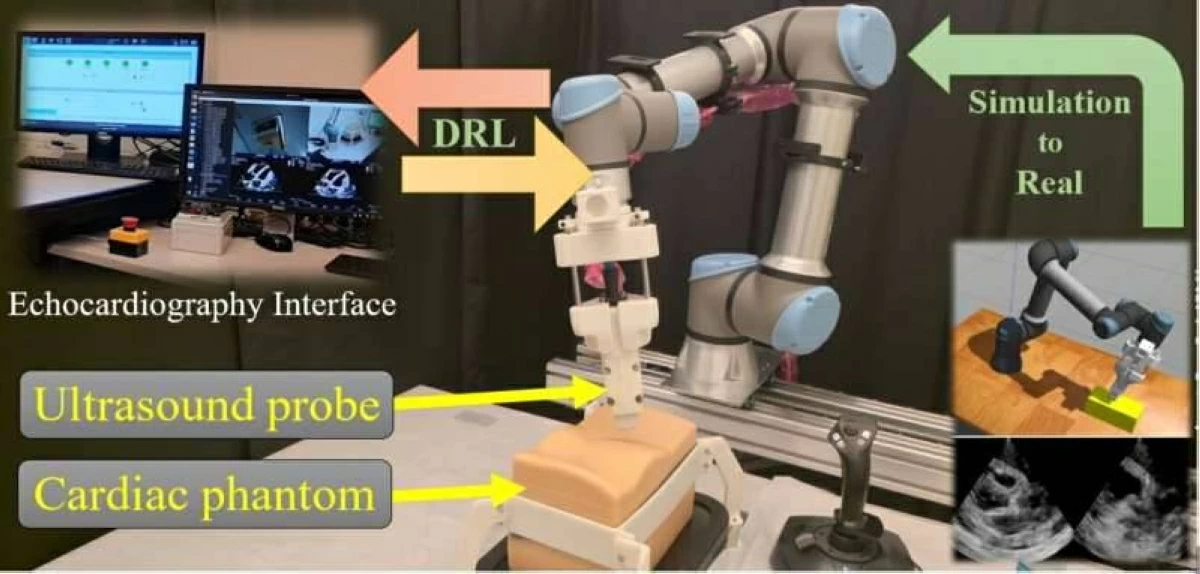
AI-Powered Robot Revolutionizes Cardiac Ultrasound Diagnostics
On May 2, 2026, Concordia University announced a significant advancement in the field of cardiac diagnostics with the development of an autonomous AI-powered robot capable of performing ultrasound examinations of the heart with a level of accuracy that exceeds human capabilities. This innovative technology is set to transform the way cardiac diseases are diagnosed, particularly in remote areas where access to specialized medical services is limited.
Revolutionary AI Technology for Cardiac Imaging
The research team at Concordia University has successfully engineered a robotic system that operates entirely independently, eliminating the need for human intervention during the ultrasound procedure. By integrating advanced artificial intelligence with robotic automation, the system replaces traditional manual expertise from sonographers with a highly trained AI that precisely maneuvers a robotic arm. This remarkable advancement not only enhances the accuracy of cardiac imaging but also addresses the pressing challenge of diagnostic accessibility in underserved regions.
In developing this system, the researchers utilized generative AI techniques to create a highly realistic simulation environment, allowing the AI to learn the optimal positioning and pressure application of the ultrasound probe. This training phase was crucial in ensuring that the robot could produce clear and clinically useful cardiac images safely and efficiently before any real-world application. Initial tests have shown that the robot can identify standard cardiac image locations with both speed and accuracy that surpasses that of remote human operators, maintaining consistent quality across all trials.
Enhanced Diagnostic Capabilities and Future Implications
The system leverages deep reinforcement learning to continuously refine its movements based on the quality of the captured images, thereby reducing the potential for human error and alleviating the burden on medical personnel. The implications of this technology extend far beyond mere accuracy; it aims to standardize the quality of cardiac imaging across different settings and expand access to advanced diagnostic services, particularly in rural and isolated communities.
As clinical trials on real patients progress, there is a strong expectation that this robotic system will become an integral component of independent cardiac diagnostics, making high-quality healthcare more accessible on a global scale. The potential for such technology to be deployed in remote areas could also lead to earlier detection of cardiac conditions, ultimately improving patient outcomes and saving lives.
Expert Analysis: Why This Matters for the UAE
The introduction of AI-powered robotic systems for cardiac diagnostics holds significant implications for the UAE, particularly given the country’s commitment to advancing healthcare technology. With a growing population and increasing prevalence of cardiovascular diseases, the integration of such innovative solutions could alleviate the pressure on healthcare facilities and ensure timely access to critical diagnostic services. This development aligns with the UAE’s Vision 2021, which emphasizes the importance of utilizing cutting-edge technology to enhance healthcare delivery and improve the overall health of the population.
Frequently Asked Questions
What is the main function of the AI-powered robot developed by Concordia University?
The AI-powered robot is designed to autonomously perform cardiac ultrasound examinations, improving diagnostic accuracy and efficiency without the need for human intervention.
How does the robot improve the quality of cardiac imaging?
The robot employs deep reinforcement learning to enhance its movements, ensuring optimal positioning and pressure application of the ultrasound probe, which results in clearer and more clinically useful images.
What are the potential benefits of this technology in remote areas?
This technology can significantly increase access to advanced diagnostic services in remote areas, enabling earlier detection of cardiac conditions and improving overall patient outcomes.
Are there plans for clinical trials with real patients?
Yes, the research team is currently conducting clinical trials with real patients to further validate the effectiveness and reliability of the robotic system.