
UAE Experts Discuss Sharia and Astronomical Criteria for Prayer Times
📋 Key Takeaway: A roundtable at Al Muntada Al Islami examined the integration of Sharia and astronomical criteria for determining prayer times in the UAE.
Roundtable Discussion on Prayer Time Determination
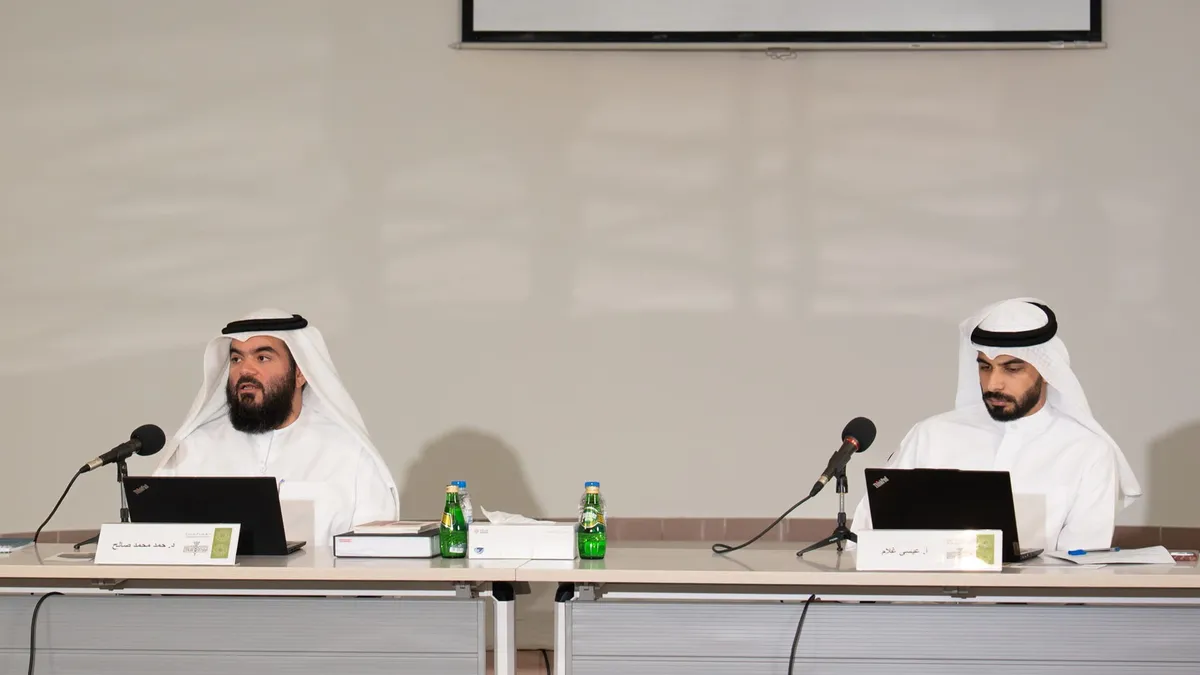
On Sunday, a specialized roundtable was convened at the headquarters of Al Muntada Al Islami, bringing together experts and interested parties to address the complex issue of determining prayer times in the modern context. The focus was on the integration of Sharia principles and contemporary astronomical methods, specifically using the UAE Hijri calendar as a model.
Dr. Hamad Mohammed Saleh Al-Banna, who heads the Times and Crescent Sighting Department at the Dubai Department of Islamic Affairs, presented key scientific insights during the session. He discussed the challenges posed by various astronomical calculation methods and the advanced technologies used in time determination, which have led to inconsistencies in practical applications. This necessitates ongoing research and scholarly input to align these methods with traditional Sharia texts.
Dr. Al-Banna provided practical examples illustrating how prayer times can be accurately determined, emphasizing the Sharia principles that underpin these calculations. He explained the astronomical criteria essential for identifying cosmic events such as dawn and twilight, thereby reinforcing the connection between Islamic jurisprudence and astronomical observation.
UAE’s Approach to Standardizing Prayer Times
The discussion also highlighted the UAE’s commitment to standardizing prayer time practices across the nation. The Hijri calendar has emerged as a sophisticated model, developed through rigorous field studies and continuous scientific monitoring. This approach has significantly enhanced the accuracy and reliability of prayer time determinations, fostering a unified reference for religious observances throughout the country.
During the Dialogue Forum, Al Muntada Al Islami showcased various institutional initiatives aimed at integrating Islamic and astronomical sciences. This integration is critical for ensuring accurate prayer times, particularly in the face of rapidly advancing technologies that may impact traditional practices.
The organization of the ‘Dialogue Forum 2’ reflects a broader commitment to delivering high-quality cultural programs that promote sound knowledge and foster meaningful scientific dialogue. The forum aims to engage diverse segments of society and raise awareness of contemporary issues related to religious practices.
Frequently Asked Questions
What was the focus of the roundtable discussion?
The roundtable focused on integrating Sharia and astronomical criteria for determining prayer times.
Who presented at the event?
Dr. Hamad Mohammed Saleh Al-Banna from the Dubai Department of Islamic Affairs presented at the event.
Why is there a need for accurate prayer time determination?
Accurate prayer time determination is essential to align religious observances with both traditional Sharia texts and modern astronomical standards.
What is the significance of the Hijri calendar in this context?
The Hijri calendar serves as a model for standardizing prayer times in the UAE, enhancing accuracy and reliability.
How does the UAE plan to address challenges in prayer time determination?
The UAE aims to integrate Islamic and astronomical sciences to address challenges and ensure accurate prayer times.