
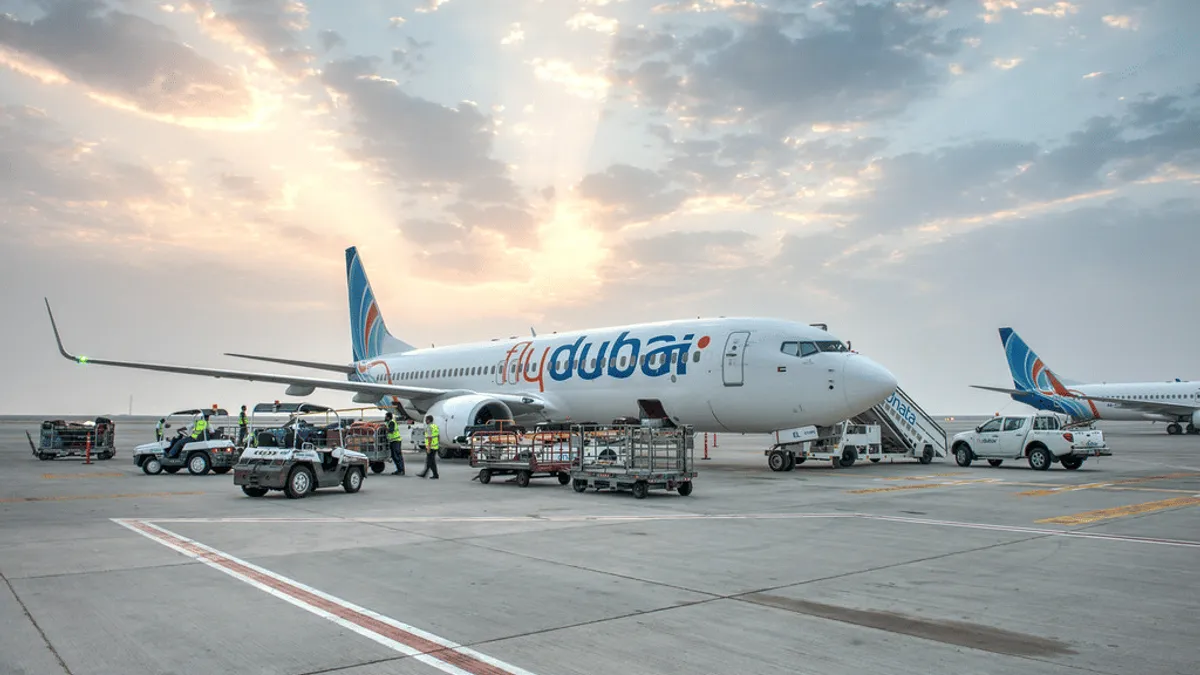
UAE Aviation Sector Resumes Full Operations After Disruption
📋 Key Takeaway: The UAE’s aviation sector has resumed full operations after a disruption, with airlines like flydubai and Emirates quickly adapting to the changes.
Resumption of Operations Marks New Chapter for UAE Aviation
The UAE’s aviation sector has officially resumed full operations following a closure that began on February 28. Ghaith Al Ghaith, CEO of flydubai, expressed optimism about the sector’s recovery, stating that the resumption reflects the resilience and agility of the UAE’s aviation ecosystem. The decision was made by the UAE General Civil Aviation Authority (GCAA) after a thorough evaluation of operational and security conditions.
Al Ghaith welcomed this significant development, highlighting the swift and coordinated measures taken by the sector to restore normal operations. He noted that these efforts reinforce global confidence in Dubai as a leading international aviation hub, emphasizing the importance of operational reliability and customer experience in meeting growing demand.
During the disruption, flydubai maintained connectivity by operating special flights through designated air corridors, demonstrating its commitment to service continuity. Al Ghaith reiterated confidence in the aviation sector’s recovery trajectory, stating that it would continue to drive connectivity and economic growth across the region.
Impact of the Disruption on Passenger Traffic
The disruption had a significant impact on passenger traffic at Dubai International Airport (DXB), which is one of the busiest airports globally. In the first quarter of 2026, DXB handled 18.6 million passengers, reflecting a 20.6 percent decline compared to the same period last year. March saw an even sharper drop, with passenger numbers declining by 65.7 percent year on year to just 2.5 million.
Despite these challenges, Dubai’s airports remained operational throughout the disruption, facilitating the movement of 6 million passengers and over 32,000 flights. The airports also handled 213,000 tonnes of essential cargo, with cargo volumes in the first quarter reaching 399,600 tonnes. This operational capacity underscores the resilience of the UAE’s aviation infrastructure.
Emirates Airlines Approaches Full Recovery
Emirates Airlines, Dubai’s flagship carrier, is also nearing a return to full operational capacity, with 96 percent of its global network now back online. The airline currently services 137 destinations across 72 countries, operating more than 1,300 weekly flights, which amounts to approximately 75 percent of its pre-disruption capacity.
In recent weeks, Emirates has progressively resumed services to key regions, including the Americas, Europe, Africa, the Middle East, and Asia-Pacific. Even during the disruption, the airline managed to carry 4.7 million passengers between March 1 and April 30, showcasing its adaptability and commitment to maintaining connectivity.
Frequently Asked Questions
What caused the closure of UAE airspace?
The UAE airspace was closed due to operational and security concerns beginning February 28.
How has passenger traffic been affected during the disruption?
Passenger traffic at Dubai International Airport dropped significantly, with a 20.6% decline in the first quarter of 2026 compared to the previous year.
What measures did flydubai take during the disruption?
Flydubai operated special flights through designated air corridors to maintain connectivity.
How is Emirates Airlines performing after the disruption?
Emirates Airlines has restored 96% of its global network and operates around 75% of its pre-disruption capacity.
What is the outlook for the UAE aviation sector?
The outlook remains positive, with confidence in the sector’s ability to recover and drive economic growth.