
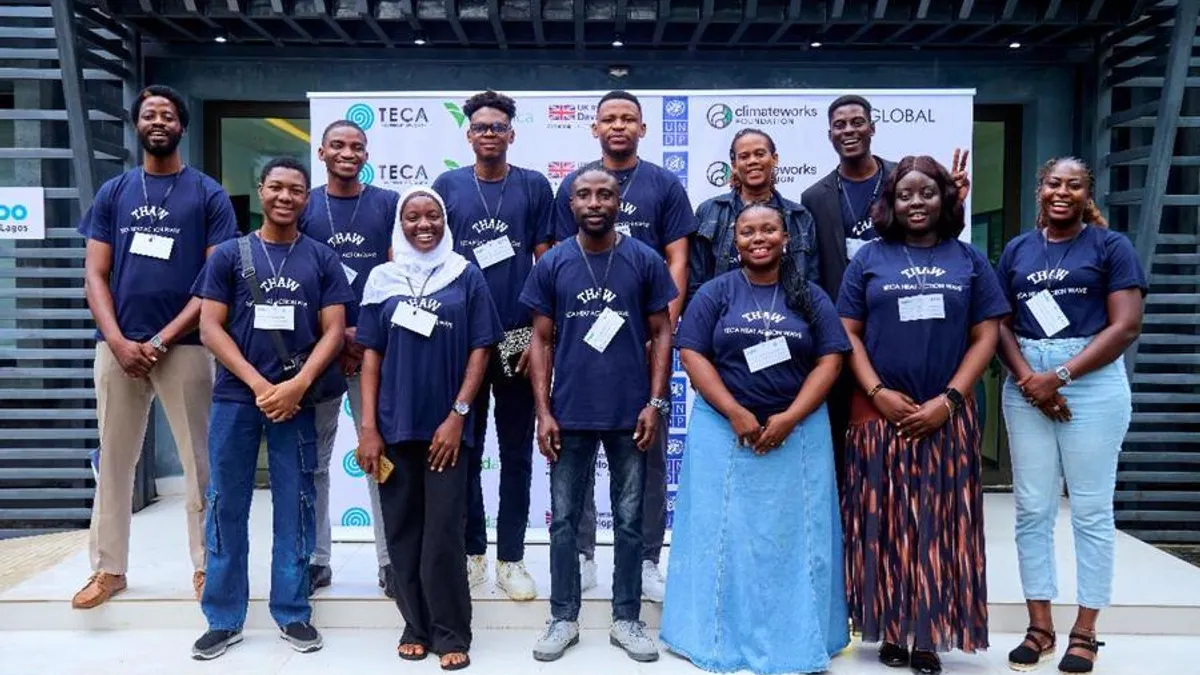
Ten Ventures Selected for Nigeria’s TECA Heat Action Wave Program
📋 Key Takeaway: Ten early-stage ventures in Nigeria have been selected for the TECA Heat Action Wave program, aimed at developing solutions to combat extreme heat and its impact on agriculture, health, and logistics.
Innovative Ventures Addressing Extreme Heat Challenges
As Nigeria grapples with rising temperatures, a new initiative is emerging to combat the adverse effects of extreme heat on agriculture, health, and logistics. The TECA Heat Action Wave (THAW) program, backed by BFA Global, FSD Africa, ClimateWorks Foundation, and the UK’s Foreign, Commonwealth & Development Office, has selected ten innovative ventures to participate in its inaugural cohort. These ventures aim to develop solutions that protect crops, reduce food spoilage, and enhance the resilience of healthcare systems.
The selected ventures include Ofemini Global Limited, which offers a logistics platform to help farmers transport perishable goods efficiently, and Agiletech Operations Consulting Limited, which provides a hyperlocal early-warning system for climate alerts. Other notable participants include Emplaris, which focuses on predictive energy systems for healthcare facilities, and Doorcas Africa, which uses AI to improve livestock health and productivity.
These innovations reflect a growing climate adaptation ecosystem in Nigeria, with ventures spread across Lagos, Kaduna, and Edo States. The geographic diversity of these companies underscores the widespread need for local solutions to combat the impacts of climate change.
Support and Funding for Selected Ventures
Each of the selected ventures will receive $56,000 in funding and access to hands-on venture acceleration support. This includes assistance in user validation, product development, business model design, and investor readiness. The program aims to equip these early-stage companies with the necessary tools to scale their solutions effectively. Notably, six of the ten ventures have a female co-founder, highlighting the role of women in driving innovation in the region.
Tyler Ferdinand, Director at BFA Global, emphasized the urgent need for investment in climate adaptation, stating that extreme heat poses significant operational risks for African economies. He underscored that the THAW program aims not only to support these ventures but also to demonstrate the potential of climate adaptation as a viable investment opportunity.
Juliet Munro from FSD Africa added that the selected ventures represent real, investable solutions that can inspire market confidence in climate adaptation finance. This initiative is crucial as it aligns with the broader goal of scaling adaptation efforts across Africa.
Implications for Nigeria’s Climate Resilience
The TECA Heat Action Wave program runs through 2026, culminating in demo days and investor engagement opportunities for the participating ventures. The initiative is part of a larger UK partnership with Nigeria, aimed at fostering private sector-led innovation and promoting job creation in the context of a greener economy. This partnership is crucial for Nigeria’s future growth and resilience, especially in light of the increasing risks posed by climate change.
As global temperatures continue to rise, the importance of local solutions to combat extreme heat cannot be overstated. The ventures selected for the THAW program are positioned to play a pivotal role in enhancing the resilience of Nigeria’s agricultural and health systems, ultimately contributing to the nation’s adaptation strategy.
Frequently Asked Questions
What is the TECA Heat Action Wave program?
The TECA Heat Action Wave program is an initiative aimed at supporting innovative ventures in Nigeria that develop solutions to combat the impacts of extreme heat.
How much funding do the selected ventures receive?
Each selected venture will receive $56,000 in funding along with venture acceleration support.
What types of solutions are being developed by the selected ventures?
The ventures are developing solutions in logistics, health, agriculture, and climate monitoring to address the challenges posed by extreme heat.
How does the program support female entrepreneurs?
Six of the ten selected ventures have female co-founders, highlighting the program’s commitment to supporting women in innovation.
What is the long-term goal of the THAW program?
The long-term goal is to demonstrate the viability of climate adaptation as an investment frontier while enhancing Nigeria’s resilience to climate change.