
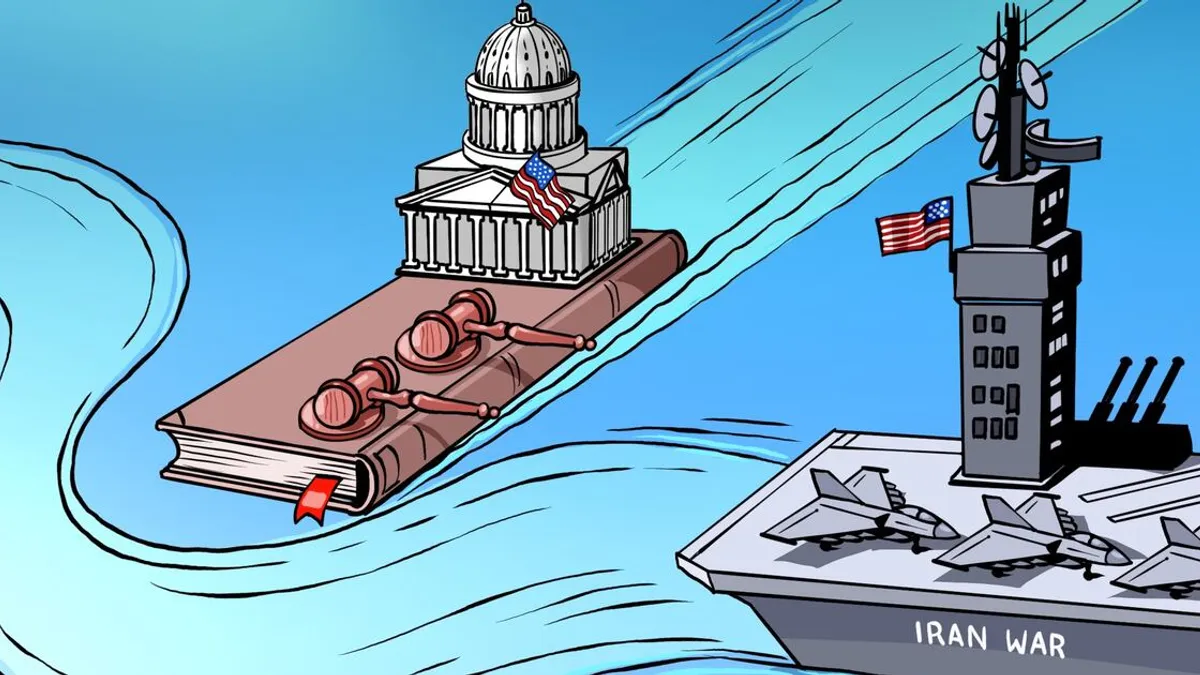
Shadi Hamid Discusses US Law in Context of Iran Conflict
📋 Key Takeaway: Shadi Hamid, a prominent scholar, provides insights on US legal frameworks and their implications for the ongoing conflict with Iran, emphasizing the need for a nuanced understanding of foreign policy.
Shadi Hamid’s Insights on US Law and Iran
In a recent discussion, Shadi Hamid, a senior fellow at the Brookings Institution, addressed the complexities of US law as it pertains to the ongoing conflict with Iran. He highlighted how legal frameworks shape foreign policy decisions, particularly in relation to military engagement and sanctions. Hamid argued that the interpretation of these laws often influences the United States’ strategic options in the Middle East.
Hamid pointed out that the legal parameters surrounding military action against Iran are not only grounded in domestic statutes but also international law. He emphasized that the US must navigate these laws carefully to maintain legitimacy in the eyes of global allies and adversaries alike. This legal scrutiny is particularly pertinent as tensions escalate, necessitating a balance between national security interests and adherence to the rule of law.
Moreover, Hamid discussed the implications of the 2001 Authorization for Use of Military Force (AUMF), which has been invoked in various contexts since the September 11 attacks. He noted that this legislation has been a focal point in debates regarding the scope of military action against Iran, raising questions about its applicability in contemporary conflicts. Hamid urged policymakers to reconsider the relevance of such laws in light of evolving geopolitical dynamics.
The Broader Context of US-Iran Relations
The relationship between the United States and Iran has long been fraught with tension, influenced by historical grievances and competing regional interests. Hamid’s analysis underscored that the legal frameworks governing US actions must reflect an understanding of this complex history. He argued that without a comprehensive approach, the US risks exacerbating existing conflicts rather than resolving them.
As the conflict evolves, Hamid posited that the US must engage in strategic diplomacy, leveraging legal insights to guide its foreign policy. He suggested that a more informed approach could lead to de-escalation and foster a more stable environment in the Middle East. The need for dialogue and negotiation, he argued, is paramount in addressing the multifaceted issues at play.
Frequently Asked Questions
What is Shadi Hamid’s perspective on US law and Iran?
Hamid emphasizes the complexities of US legal frameworks and their impact on foreign policy regarding Iran.
How does the AUMF influence US actions against Iran?
The AUMF has been a critical point in discussions about the legality of military engagement with Iran.
What role does international law play in US-Iran relations?
International law shapes the legitimacy of US actions and is crucial for maintaining global alliances.
Why is diplomacy important in the context of US-Iran conflict?
Hamid argues that strategic diplomacy can help de-escalate tensions and promote stability in the region.