Underwater Archaeologists Discover Ancient Shipwrecks Near Gibraltar
📋 Key Takeaway: A groundbreaking archaeological project has uncovered over 100 shipwrecks in the waters near Gibraltar, shedding light on maritime history spanning 2,500 years.
Significant Discovery in the Green Island Bay
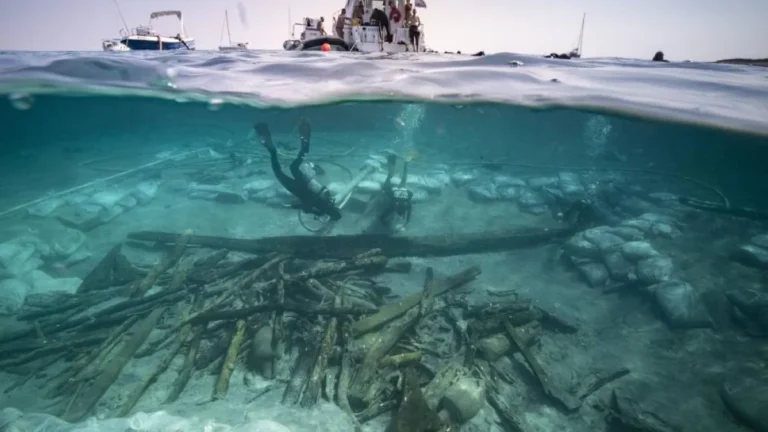
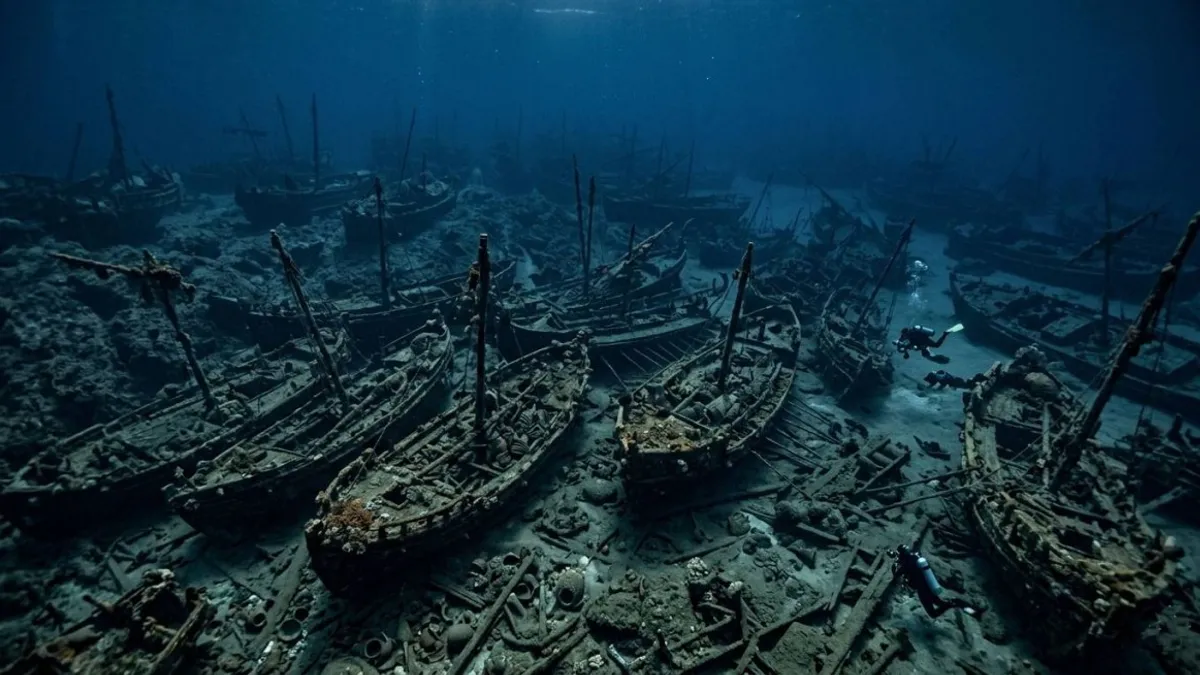
In the depths of Green Island Bay near the Strait of Gibraltar, marine archaeologists have made a remarkable discovery that resembles an underwater museum frozen in time. This site, which has preserved a maritime memory extending over 2,500 years, is home to what researchers are calling an underwater cemetery containing the remains of more than 100 lost ships. These vessels, dating from the Punic era through the Roman period, the Middle Ages, and into World War II, provide a unique glimpse into the region’s extensive maritime history.
The significant findings are the result of an extensive research initiative known as the ‘Heracles Project,’ which spanned three years and identified 151 archaeological sites across approximately 29 square miles between Spanish shores and Gibraltar. Among these sites, over 100 shipwrecks have been documented, making this area one of the most densely packed with maritime history in the Mediterranean.
Natural Ship Trap and Historical Significance
Researchers describe this bay as a natural trap for ships, as all vessels navigating between the Mediterranean and the Atlantic must pass through the Strait of Gibraltar. Many ships historically found themselves anchored in this bay, waiting for improved weather conditions or calmer currents. Over the centuries, this repeated anchoring has led to a series of maritime accidents, whether due to storms, wars, or mechanical failures, resulting in layers of sunken vessels accumulating on the seabed.
The site’s significance extends beyond its role as a commercial passage; it has also witnessed major naval battles, notably the Battle of Gibraltar in 1607 and the Battle of Green Island in 1801, where fierce confrontations between European fleets left behind remnants of ships that remain buried today.
Diverse Historical Artefacts and Modern Threats
Among the most exciting discoveries are ships from the Middle Ages, a period during which wooden remains are rarely found in the Mediterranean. These findings provide a valuable opportunity to understand navigation techniques during the later Islamic periods in southern Spain. Additionally, vessels from various nationalities, including Dutch, Spanish, English, and Venetian, reflect the strait’s historical role as an international corridor for trade and warfare.
One notable find includes an 18th-century Spanish warship designed with camouflage resembling fishing boats, which was used to ambush British vessels near Gibraltar. The archaeological team, including members from the University of Cádiz, has confirmed that such diversity in shipwrecks is unparalleled in any other maritime site in the region.
However, this rich maritime heritage faces increasing threats. The seabed is undergoing continuous changes due to industrial activities, port operations, and heavy shipping traffic. Additionally, the proliferation of gas algae has covered large sections of the wrecks, leading to the disappearance of some sites that had been exposed for centuries.
Preservation Efforts and Future Research
Despite these challenges, researchers are actively working to protect this unique heritage by digitally documenting it using 3D imaging and virtual diving technologies. This initiative aims to create a global archive that allows for the study of these ships without causing damage, thus striving to preserve one of the richest maritime records in the world.
Frequently Asked Questions
What is the Heracles Project?
The Heracles Project is a three-year research initiative that uncovered over 100 shipwrecks near Gibraltar.
Why is the Green Island Bay significant?
It serves as a natural trap for ships and has a rich history of maritime accidents and battles.
What types of ships have been discovered?
The discoveries include vessels from the Punic era, Roman times, the Middle Ages, and World War II.
What threats do these shipwrecks face?
The shipwrecks are threatened by industrial activities, heavy shipping traffic, and environmental changes.
How are researchers preserving these shipwrecks?
Researchers are using 3D imaging and virtual diving to digitally document the wrecks for study and preservation.