Gaza Residents Stranded in West Bank Face Harsh Realities Amid Ongoing Conflict
📋 Key Takeaway: A group of Gaza residents, stranded in the West Bank due to ongoing conflict, are living in dire conditions under a stadium, struggling to support their families back home.
Stranded Lives Under Nablus Stadium
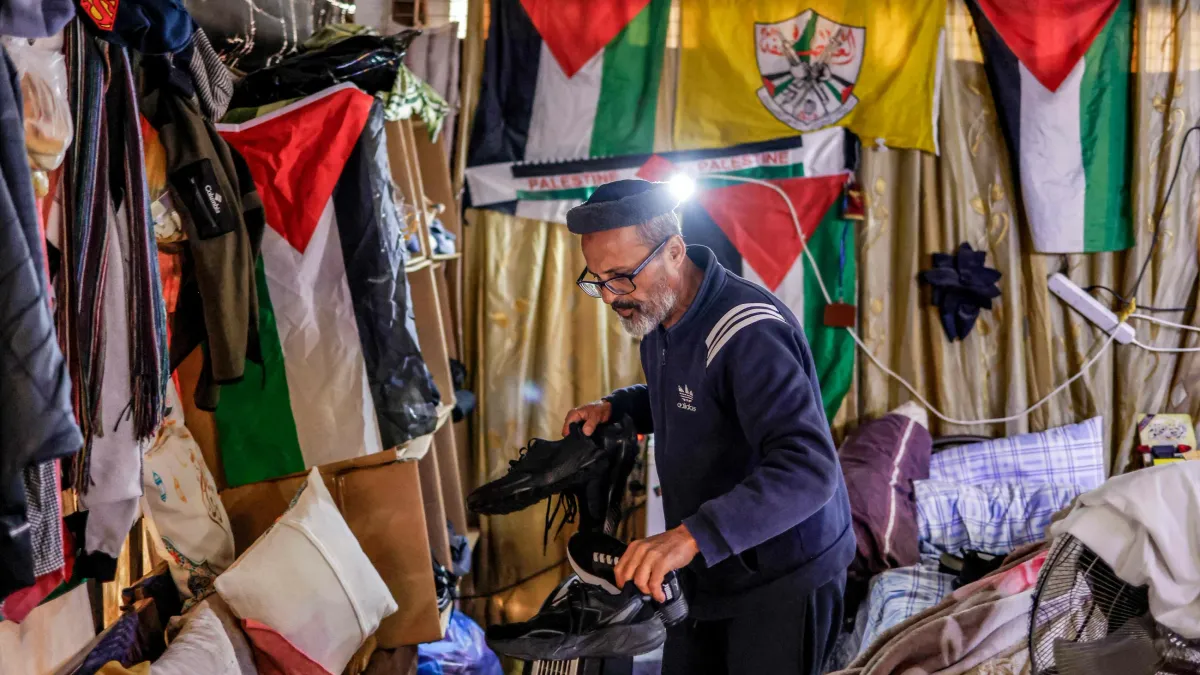
Under the bleachers of a stadium in Nablus, a group of men from Gaza are living in a former changing room, unable to return home due to the war that erupted over two and a half years ago. Among them is Sameer Abu Salah, 54, who had been working in Tel Aviv before the conflict escalated. He recalls entering Israel just four days prior to the outbreak of hostilities on October 7, 2023.
Abu Salah, who now scrapes by collecting and reselling recyclables, sends money back to his family in Gaza, where he has tragically lost two sons to Israeli airstrikes. Reflecting on his current situation, he lamented, ‘Look at me now — I live in a tent. We used to live with dignity, while here we’ve been thrown aside like dogs.’ Despite the dire conditions, he has made an effort to create a semblance of home, decorating his living space with Palestinian flags and a portrait of Yasser Arafat.
The Palestinian Authority’s labor ministry reported in March that it had provided cash assistance to 4,605 Gazans stranded in the West Bank, but many remain fearful of leaving the confines of the stadium. Sameh, another resident who sought medical treatment for his son, expressed the frustration of confinement, stating, ‘It’s boring, but what can we do? We’re in a jail.’
Economic Hardships and Family Separation
The ongoing conflict has devastated Gaza’s economy, with the UN reporting that 81 percent of structures were destroyed during the war, leading to an unemployment rate soaring to 80 percent. Prices for goods have skyrocketed due to Israeli restrictions on truck entries. Many Gazans who once thrived in their professions now find themselves in dire straits, separated from their families and homes.
Nahed Al Hilou, a Gaza businessman who relocated to Ramallah just days before the outbreak of the war, has managed to open a falafel restaurant in the West Bank. Despite his success, he remains anxious for his family in Gaza, who he lost contact with for 20 days during the conflict. ‘Of course Gaza is dearer than here, but there, there is no home left, nothing,’ he said, highlighting the difficult choice many face between safety and their homeland.
Shahdeh Zaarb, a resident of Beit Lahiya, has fared slightly better due to his West Bank residency, which he obtained after years of work. He has established a farm in Qalqilya but has not seen his children since 2021. ‘My children are in one place, I’m in another, and I can’t bring them here because of the crossings,’ Zaarb explained, underscoring the emotional toll of separation.
The Human Cost of Conflict
The stories of these men reflect a broader narrative of suffering and loss experienced by many Gazans in the wake of ongoing violence. As they navigate their new realities, the psychological and emotional impacts of the conflict weigh heavily on them. The fear of returning home, coupled with the uncertainty of their future, continues to shape their lives in the West Bank.
With the Israeli military still controlling significant portions of Gaza and ongoing tensions persisting, the prospect of returning remains bleak for many. The men living under the bleachers of Nablus stadium represent just a fraction of those displaced by the conflict, highlighting the urgent need for humanitarian assistance and a resolution to the ongoing crisis.
Frequently Asked Questions
What are the living conditions like for Gaza residents stranded in the West Bank?
Many live in makeshift shelters under stadium bleachers, facing dire conditions and economic hardships.
How has the conflict affected Gaza’s economy?
The UN reports that 81% of Gaza’s structures were destroyed, leading to an unemployment rate of 80% and skyrocketing prices.
Are there any efforts to assist stranded Gazans?
The Palestinian Authority has provided cash assistance to thousands of stranded individuals, but many still face significant challenges.
What are the emotional impacts of separation for these families?
Separation from family members and homes has caused significant emotional distress for many Gazans living in the West Bank.
Is there hope for returning to Gaza?
Many express a desire to return, but the destruction and ongoing conflict make the prospect uncertain.