
Cannibalism: A Deeply Rooted Taboo and Its Cultural Implications
📋 Key Takeaway: Cannibalism remains one of humanity’s most profound taboos, with cultural and historical dimensions that challenge contemporary perceptions of morality and survival.
Understanding Cannibalism: A Cultural Perspective
Cannibalism is often viewed as one of the most abhorrent acts in human culture, evoking fear and revulsion. This perception is deeply entrenched in literature and cinema, where characters like Hannibal Lecter, portrayed by Oscar-winning actor Anthony Hopkins, are terrifying not just for their murderous acts but for crossing a moral boundary that separates humanity from inhumanity. This act is not merely seen as a behavior but as a complete breakdown of the ethical framework that underpins society.
However, this understanding is not static; it varies across time and cultures. Contrary to popular belief, cannibalism was not universally condemned in all societies throughout history. Animal behavior expert and author Bill Schott notes that this practice has appeared in certain cultures as part of dietary or ritualistic practices, previously devoid of the disgust or horror associated with it today. Historical research, including studies from the University of Brighton, indicates that motivations for cannibalism among early humans ranged from survival to ritualistic practices and even nutritional or medicinal reasons.
Cannibalism in Nature: A Different Context
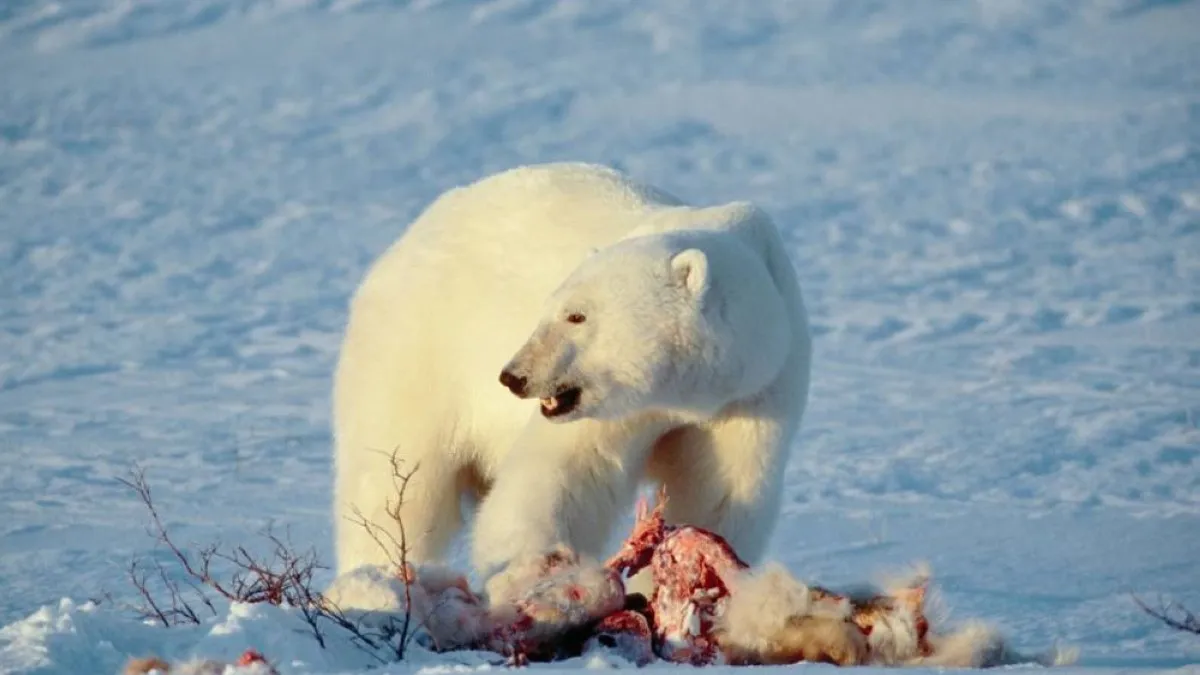
In the animal kingdom, cannibalism is not an unusual behavior but a documented phenomenon across various species, from insects to fish and some mammals. The reasons for this behavior in nature are diverse. In some instances, it arises from food shortages, compelling creatures to consume any available source to survive. In other cases, it relates to competition, where eliminating a member of the same species can alleviate resource pressure or enhance reproductive opportunities.
Scientific reviews published in the National Institutes of Health (NIH) suggest that this behavior is considered a survival strategy among many animal species and not a deviation. Some studies indicate that cannibalism in animals may confer evolutionary benefits, such as accelerated growth or access to rare nutrients. However, these interpretations are confined to the animal world and cannot be directly applied to human behavior.
The Human Dimension: Between Necessity and Deviance
For humans, the context shifts dramatically. Instances of cannibalism are exceedingly rare and typically associated with extreme or exceptional circumstances. In cases of famine or disasters, such as survival situations, individuals may resort to cannibalism as a last resort for survival. Psychological studies, including analyses published in Psychology Today, have documented cases where this behavior is linked to complex psychological motives, ranging from control and behavioral disorders to a disconnection from social norms.
While some ancient cultures exhibited ritualistic practices involving cannibalism, these remain isolated cases and do not reflect general human behavior. The act of cannibalism, when committed by humans, is often perceived as a severe deviation from societal norms, raising ethical and health concerns.
Health Risks and Ethical Boundaries
Beyond ethical considerations, cannibalism poses significant health risks. Medically, it is regarded as a highly dangerous behavior, particularly due to the transmission of rare neurological diseases known as prion diseases. Documented cases, such as Kuru, have shown that consuming human brain tissue can lead to deadly diseases that affect the nervous system, underscoring the public health dangers associated with this practice.
In conclusion, despite various scientific and historical interpretations, cannibalism remains a clear moral line in modern human society. While it can be understood in the animal kingdom as part of survival mechanisms or in some historical contexts as a limited phenomenon, in contemporary human societies, it represents a blatant transgression of ethical, health, and social values. Thus, it is not seen as a viable option or a debatable behavior but stands as one of the most significant taboos that reflect the essence of what distinguishes humans from other beings.
Frequently Asked Questions
What is the historical context of cannibalism?
Cannibalism has appeared in various cultures historically for reasons ranging from survival to ritualistic practices.
What are the health risks associated with cannibalism?
Cannibalism poses significant health risks, including the transmission of prion diseases like Kuru.
How is cannibalism viewed in the animal kingdom?
In nature, cannibalism is a common behavior among many species, often linked to survival strategies.
Why is cannibalism considered a taboo in modern society?
Cannibalism is viewed as a severe moral transgression that contradicts ethical, health, and social values.
What psychological factors are associated with cannibalism in humans?
Cannibalism in humans can be linked to complex psychological motives, including control and behavioral disorders.