
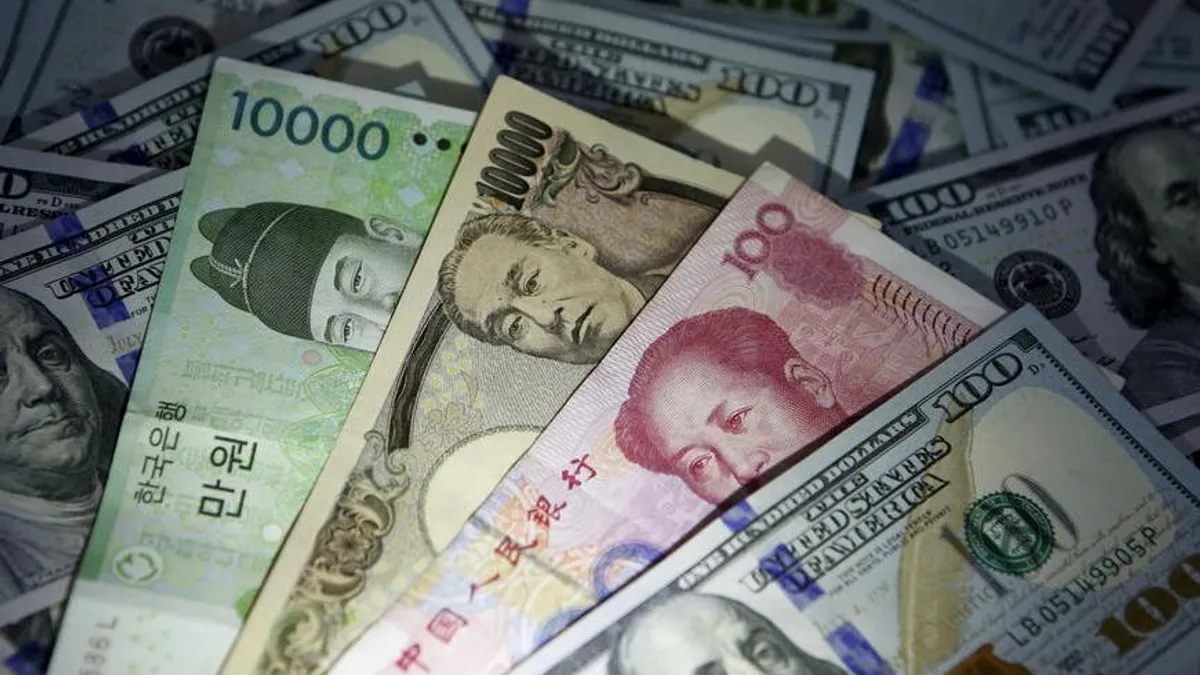
Yen Surges Against Dollar Amid Speculation of Japanese Intervention
📋 Key Takeaway: The yen experienced a significant rise against the dollar, leading to speculation of intervention by Japanese authorities, while geopolitical tensions in the Gulf of Oman influenced market behavior.
Yen’s Fluctuation and Speculation of Intervention
The Japanese yen saw a notable increase against the U.S. dollar on Monday, with a peak rise of 0.75% to 155.69 before retracting slightly. This surge raised concerns among analysts regarding potential intervention by Japanese authorities to stabilize the currency. The yen concluded the day at 157.12, maintaining a stronger position against both the euro and the pound.
Last week’s performance marked a significant rebound for the yen, which appreciated approximately 1.5%, its largest weekly increase since February. Officials from Japan’s Ministry of Finance did not provide immediate comments on the currency’s movement, leading to further speculation about potential intervention strategies.
Analysts believe the case for intervention is compelling, citing the inflationary pressures resulting from a weaker yen due to rising import prices. Roberto Cobo Garcia, head of G10 FX strategy at BBVA, noted that the U.S. administration seems amenable to such actions, and Japan’s foreign exchange reserves are substantial enough to support intervention efforts.
Geopolitical Tensions Impacting the Dollar
Market participants remained cautious as reports from Iranian news agency Fars indicated that two missiles had struck a U.S. warship in the Gulf of Oman. The incident reportedly occurred after the warship ignored warnings from Iranian authorities regarding its presence in the Strait of Hormuz. However, U.S. Central Command refuted these claims, asserting that no Navy ships had been attacked.
In response to these developments, the U.S. dollar gained ground, reflecting its status as a safe haven amid escalating geopolitical tensions. The dollar index, which measures the currency’s strength against a basket of six others, rose by 0.2% to 98.379. The dollar’s resilience is often attributed to the limited impact of energy price inflation on the U.S. economy.
Meanwhile, the euro weakened by 0.2% to $1.1701, influenced by comments from German Chancellor Friedrich Merz regarding U.S. troop reductions in Germany and rising tariff threats from the Trump administration. Analysts suggest that while these tariff discussions are concerning, the prevailing geopolitical situation in the Middle East is the primary driver of market sentiment.
Currency Movements and Market Reactions
The British pound fell by 0.3% to $1.3539, with markets closed for a public holiday. The Australian dollar also dipped by 0.3% to $0.7181, while the New Zealand dollar saw a minor decrease of 0.1% to $0.5888. The Reserve Bank of Australia is expected to announce a policy decision on Tuesday, with most analysts anticipating a cash rate increase to 4.35%.
As the geopolitical landscape continues to evolve, analysts are closely monitoring the implications for currency markets. The ongoing conflict in the Middle East is expected to exert upward pressure on fuel and raw material costs, impacting inflation and consumer prices.
Frequently Asked Questions
What caused the yen’s recent rise against the dollar?
The yen’s rise was driven by speculation of intervention by Japanese authorities and a recent increase in its value.
How did geopolitical tensions affect the dollar?
The dollar strengthened amid reports of missile strikes involving a U.S. warship, reinforcing its status as a safe haven.
What are analysts predicting for the yen’s future?
Analysts predict that intervention may be necessary to maintain the yen’s value below 160 against the dollar.
What impact could the Middle East conflict have on global markets?
The conflict could lead to increased inflationary pressures due to rising fuel and raw material costs.
What is the expected action from the Reserve Bank of Australia?
Analysts expect the Reserve Bank of Australia to raise the cash rate to 4.35% in its upcoming policy decision.