Indian Experts Assess Middle East as Vital for National Security and Economic Stability
📋 Key Takeaway: During a recent strategic dialogue, Indian experts highlighted the Middle East’s significance to India’s national security and economic stability amidst rising geopolitical tensions.
Strategic Dialogue Highlights Regional Importance
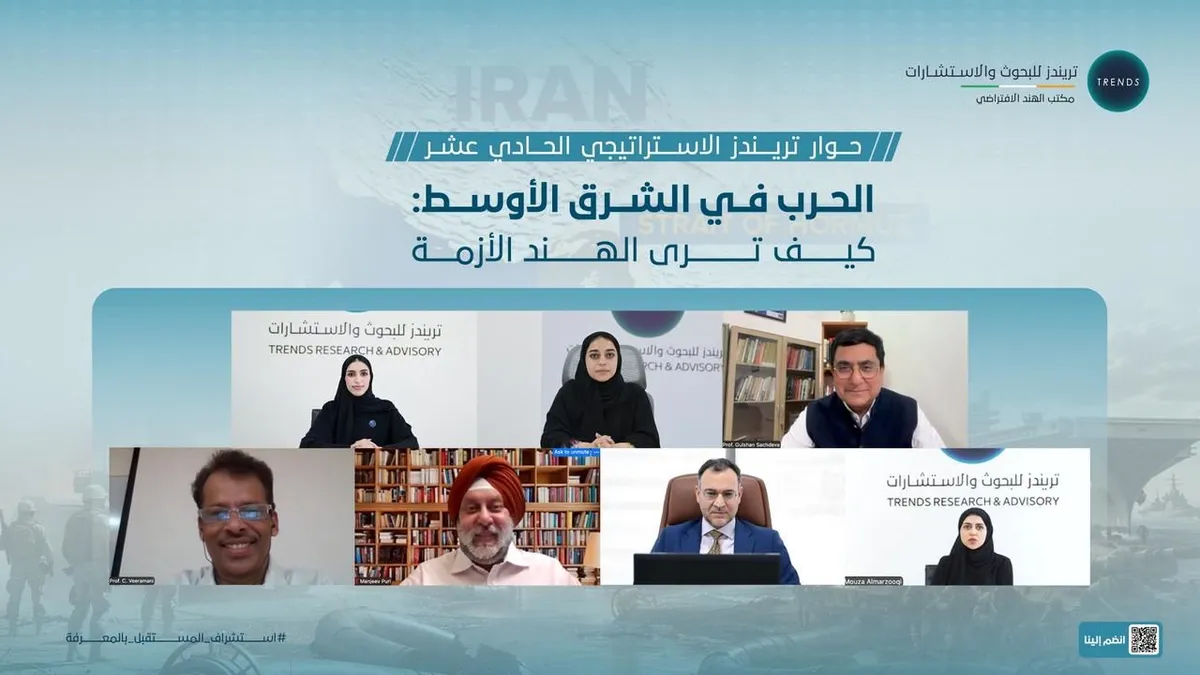
In light of deep geopolitical shifts in the Middle East, Indian experts convened for the eleventh strategic dialogue organized by Trends Global, focusing on the implications of ongoing conflicts in the region. The dialogue, held in New Delhi, emphasized the need for India to reassess its position and role in the evolving dynamics of the Middle East. Participants included a distinguished group of researchers, diplomats, and strategic experts who articulated India’s perspective on the crisis.
The discussions revealed that India no longer perceives the Middle East merely as an energy source but as a vital region linked directly to its national security, economic stability, and aspirations as a rising global power. The ongoing conflict has escalated into a significant test for the international community’s ability to manage complex crises, while also challenging emerging powers like India to play a more influential role in maintaining global stability.
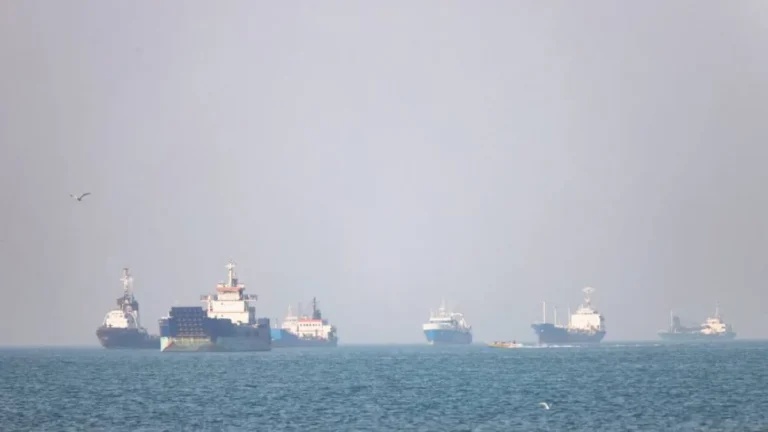
Experts noted that the Middle East occupies a central position in India’s contemporary strategy, driven not only by oil and gas interests but also by intertwined commercial, humanitarian, and geopolitical concerns. India’s rapid economic growth hinges on the stability of the Gulf region to ensure uninterrupted energy supplies and the safety of maritime trade routes, particularly through the Strait of Hormuz, a critical artery for global commerce.
Three Critical Dimensions of India’s Engagement
The crisis in the Middle East presents India with three primary dimensions of concern: energy security, maritime trade security, and the welfare of its expatriate communities. India’s dependence on oil and gas imports from the Gulf to meet domestic needs makes any disruption in supply or spike in energy prices a direct threat to its economic growth and financial stability. Rising oil prices also affect inflation rates, transportation costs, and the government’s ability to maintain economic and social balances.
The second dimension involves the security of trade and maritime routes. The Gulf and Red Sea shipping lanes are essential for international trade, and any threat to navigation or closure of maritime chokepoints would have immediate repercussions for the Indian economy and global supply chains. Participants expressed heightened concerns over security risks associated with maritime navigation, particularly amid escalating military tensions in the region.
Lastly, the humanitarian aspect is critical, as millions of Indians reside in Gulf countries, forming one of the largest foreign communities in the region. Their remittances are vital for the Indian economy. Any significant security escalation poses additional challenges for the Indian government in protecting its citizens and ensuring social and economic stability linked to the Indian diaspora abroad.
Navigating Complex Geopolitical Relationships
The dialogue underscored the strategic complexity India faces in maintaining balanced relationships with various regional and international players amid the ongoing conflict. India has established defense and strategic ties with Israel while relying heavily on the Gulf states for energy, and it also maintains significant trade relations with Iran. This intricate web of connections necessitates a ‘multi-alignment’ policy that safeguards national interests without engaging in rigid alliances.
Experts discussed the immediate economic implications of the conflict, including the depreciation of the Indian rupee and rising import costs, which adversely affect agriculture, industry, and energy sectors. However, they noted that these challenges could accelerate India’s transition towards renewable energy and enhance its energy independence, thereby reducing vulnerability to future geopolitical crises.
The Role of Ethical Diplomacy in Regional Stability
Former Indian ambassador to the EU and Nepal, Manjeev Singh Puri, articulated India’s approach to the crisis, combining political pragmatism with moral considerations. He emphasized that the Indian public is increasingly concerned about the humanitarian devastation and security deterioration in the region. India’s leadership advocates for political solutions and de-escalation, recognizing that warfare is no longer an effective means of resolving disputes in an interconnected world.
Puri pointed out that disruptions in energy supplies directly impact daily life in India, particularly in rural areas, adding a social and political dimension to the crisis that exceeds traditional geopolitical calculations. He affirmed that India would continue to support regional stability and strengthen partnerships with Gulf states, particularly the UAE, as a key strategic ally in areas such as economy, energy, investment, and development.
Frequently Asked Questions
What is the significance of the Middle East for India?
The Middle East is vital for India’s national security, economic stability, and energy needs.
How does the current conflict affect India’s economy?
The conflict threatens energy supplies, increases import costs, and impacts inflation, affecting economic growth.
What are the three key dimensions of India’s engagement in the Middle East?
Energy security, maritime trade security, and the welfare of Indian expatriates.
How is India balancing its relationships in the region?
India employs a ‘multi-alignment’ policy to maintain relationships with various regional powers without taking sides.
What role does ethical diplomacy play in India’s foreign policy?
India advocates for political solutions and de-escalation to address humanitarian concerns and regional stability.