
Earthquake Activity Insights in the Arabian Peninsula
The Arabian Peninsula experiences relatively mild earthquakes compared to other tectonically active regions. This phenomenon can be attributed to the geological stability of the Arabian Plate, which underlies much of the area. Geologists have identified several factors contributing to the low frequency and intensity of seismic events in this region.
Geological Stability of the Arabian Plate
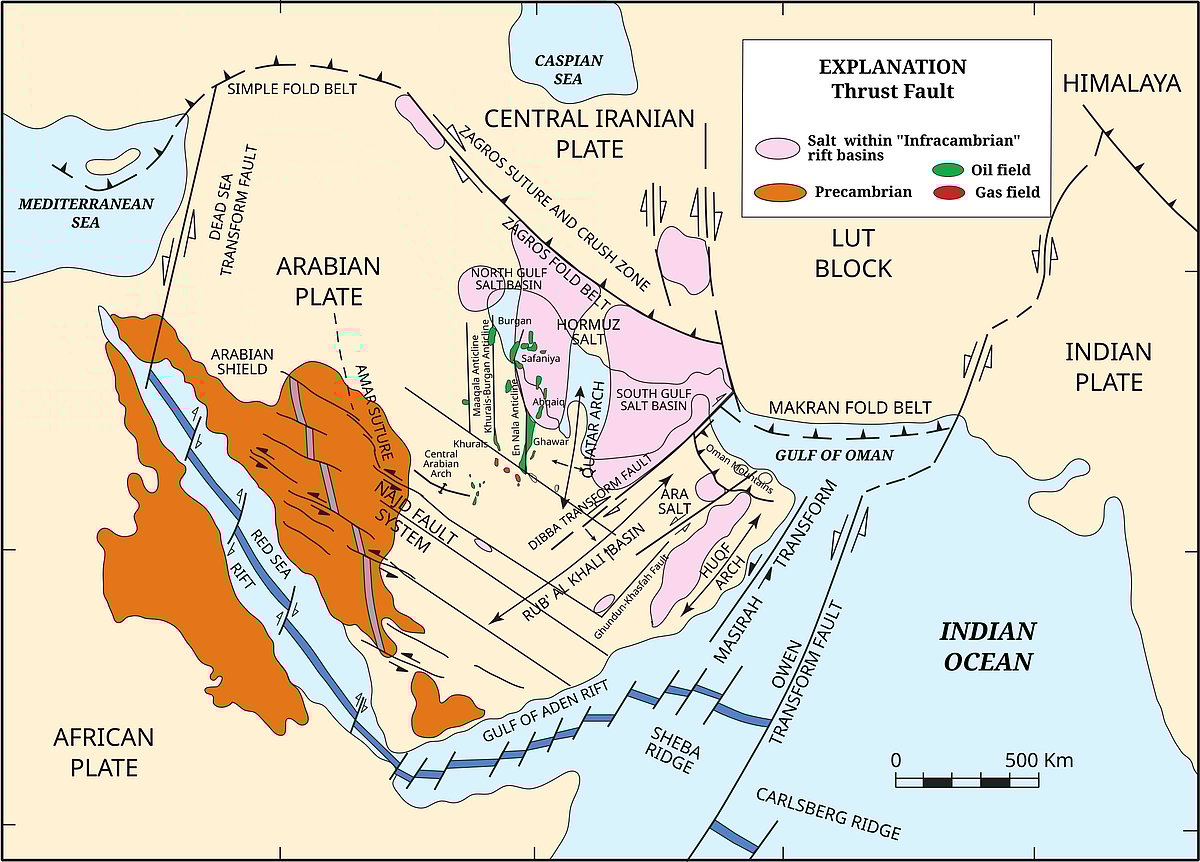
The Arabian Peninsula is primarily situated on the Arabian Plate, a stable craton that is characterized by its ancient and rigid structure. This tectonic plate encompasses several countries, including Saudi Arabia, Yemen, the UAE, Oman, Kuwait, Bahrain, Qatar, and parts of Iraq and Jordan. The stability of the Arabian Plate means it experiences low internal stress and strain, which significantly reduces the likelihood of powerful earthquakes.
Researchers Sherif M. Ali from the National Research Institute of Astronomy and Geophysics in Cairo and Kamal Abdelrahman from King Saud University in Riyadh have published findings in the journal *Frontiers of Earth Sciences* that support this understanding. They explain that while seismic activity does occur in the region, it is primarily concentrated along the plate boundaries, such as the Zagros Belt to the northeast and the Red Sea Rift to the west. These areas are characterized by tectonic plates colliding or pulling apart, making them the main sources of earthquakes.
Seismic Activity and Historical Data
To further investigate earthquake occurrences in the Arabian Peninsula, researchers analyzed nearly 3,000 recorded seismic events from 1941 to 2019. These earthquakes ranged in magnitude from 1.0 to 6.2 and occurred at depths of up to 50 kilometers. The data, sourced from the International Seismological Centre, provided insights into the frequency and intensity of seismic events across different regions.
The analysis revealed varying stress levels across different terranes, which are fault-bounded fragments of the Earth’s crust with distinct geological histories. The Arabian Peninsula’s interior regions, being situated away from active fault lines, experience fewer and generally lower-magnitude earthquakes. Additionally, the geological characteristics of the Arabian Shield and surrounding areas, including low heat flow and thick, stable crustal rocks, contribute to the region’s low seismicity.
The Arabian Platform and Tectonic Features
The Arabian Platform, located east of the Arabian Plate, consists of sedimentary rocks that overlay the Arabian Shield and slope toward the Arabian Gulf. This platform is part of the broader Middle East basin, which extends into neighboring regions. Despite the overall stability, the northeastward movement of the Arabian Plate still generates various tectonic features and seismic zones.
Most earthquakes in the Arabian Peninsula are shallow and can be felt by residents, though they rarely cause significant damage. The combination of the region’s position within a stable tectonic plate, its distance from active fault zones, and the geological properties of the crust all contribute to the relatively mild nature of earthquakes experienced in the area. This is in stark contrast to more seismically active regions, such as the Pacific Ring of Fire.
Earthquake Magnitudes and Frequency
The researchers have estimated the largest expected earthquake magnitudes for various terranes within the Arabian Peninsula. For instance, the Midyan region could experience quakes up to magnitude 6.0, while the Tabuk-Neom area may see magnitudes of 5.4. Other regions, such as Hijaz, Jeddah, and Asir, have expected maximum magnitudes of around 4.7, 4.8, and 7.7, respectively. The average time between significant earthquakes varies by terrane, ranging from approximately 6 to 200 years.
The Najd fault system, a major tectonic feature of the Arabian Shield, is identified as the most likely location for significant earthquakes in the region. Although large earthquakes are infrequent, they remain a possibility, especially near the plate boundaries.
Advancements in Earthquake Prediction
In recent developments, scientists have created an advanced artificial intelligence (AI) model aimed at improving earthquake prediction in the Arabian Peninsula. This model, published in the journal *Remote Sensing*, focuses on the Arabian Plate, which, while not an earthquake hotspot, is surrounded by active tectonic zones.
The researchers analyzed nearly 22 years of earthquake data from the US Geological Survey, along with satellite images and elevation data. Their AI model combines two sophisticated tools—Inception v3-ensemble extreme gradient boosting (XGBoost) and shapely additive explanations (SHAP)—to predict seismic events and elucidate the influence of various geological factors.
This hybrid model has achieved an impressive accuracy rate of 87.9%, surpassing previous prediction methods. It excels at identifying complex patterns from historical earthquake data and assessing the likelihood of future seismic events within specific zones, a process known as spatial probability assessment (SPA). The AI model also considers factors such as ground shaking gaps and tectonic contacts, enhancing the reliability of its predictions.
Implications for Earthquake Preparedness
While the Arabian Peninsula predominantly experiences small to moderate earthquakes, this new AI tool can help pinpoint areas with higher seismic risks. The researchers emphasize that this is the first application of explainable AI (XAI) in earthquake probability forecasting for this region. The study suggests that this AI-driven approach could be adapted globally, potentially enhancing seismic hazard predictions and aiding in earthquake preparedness and construction planning in various tectonic settings.
FAQs
Why are earthquakes in the Arabian Peninsula generally milder?
The Arabian Peninsula is situated on the Arabian Plate, a stable craton that experiences low internal stress and strain, resulting in fewer and less intense earthquakes compared to more tectonically active regions.
What factors contribute to the low seismicity of the Arabian Peninsula?
Key factors include the region’s distance from active fault lines, the geological properties of the Arabian Shield, and the thick, stable crustal rocks that characterize the area.
How accurate is the new AI model for predicting earthquakes in the region?
The AI model developed by researchers has achieved an accuracy rate of 87.9%, making it a significant advancement in predicting seismic events in the Arabian Peninsula.
Conclusion
The Arabian Peninsula’s geological stability significantly contributes to its relatively mild earthquake activity. With advancements in AI technology, researchers are now better equipped to predict seismic events, enhancing preparedness and safety measures. Continued study of the region’s tectonic features and seismic patterns will be crucial in understanding and mitigating earthquake risks in the future.
Also Read:
Gulf Region Excels in AI Adoption for Frontline Workers