
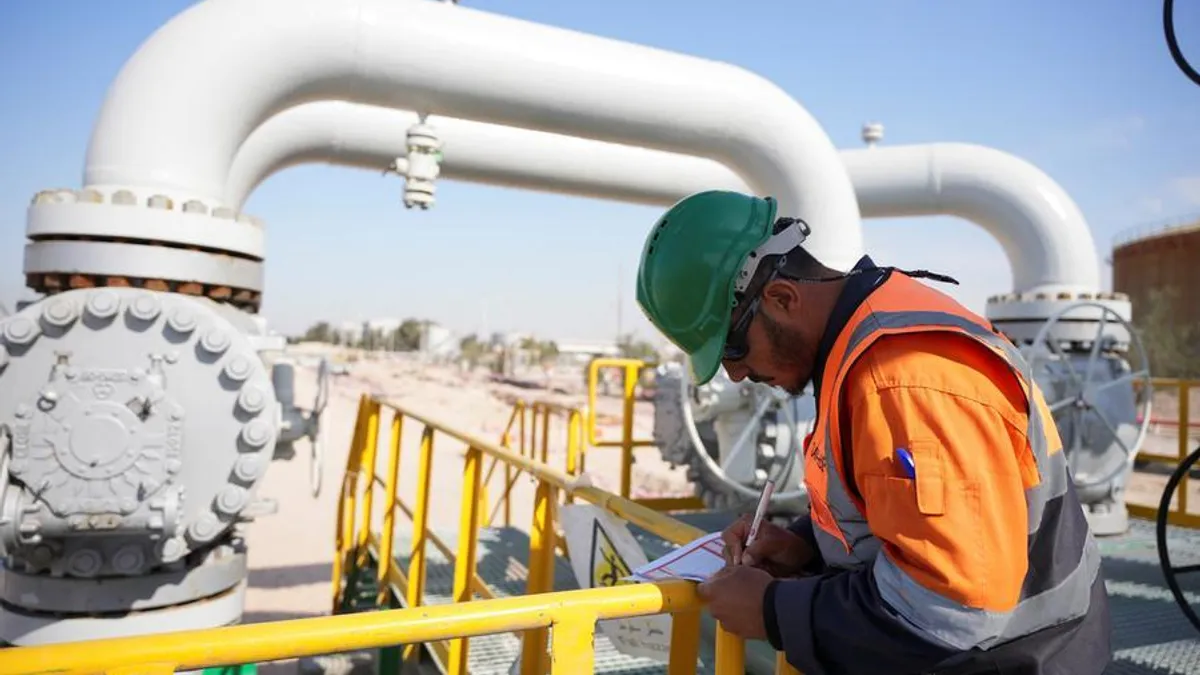
Iraq to Activate Kirkuk-Nineveh Crude Oil Pipeline Within Month
📋 Key Takeaway: Iraq’s Oil Ministry announced that the Kirkuk-Nineveh crude oil pipeline will be operational within a month, enhancing export capabilities amid geopolitical tensions.
Operational Timeline for the Pipeline
Iraq’s Oil Ministry has confirmed that the crude oil pipeline connecting Kirkuk to Nineveh will be operational within a month. Basim Khudair, undersecretary of the Oil Ministry, stated that this development is part of a broader initiative to enhance the Iraq-Turkey crude oil pipeline, which extends to the Ceyhan Port on the Mediterranean Sea.
The Kirkuk-Nineveh pipeline is strategically located outside the Kurdistan Region and is designed to have an export capacity of up to 350,000 barrels per day (bpd). However, Khudair noted that achieving this capacity immediately is not feasible due to limitations in the existing pipeline infrastructure connecting Basra to Kirkuk.
Diversification of Export Routes
The Iraqi government is actively seeking to diversify its crude oil export routes, particularly in light of recent geopolitical tensions that have affected its operations through the Strait of Hormuz. The ongoing conflict involving the United States, Israel, and Iran has prompted Baghdad to explore alternative export avenues.
Khudair emphasized the importance of the proposed Basra-Haditha pipeline project as a strategic solution to enhance Iraq’s export capacity. The project is expected to significantly increase the volume of crude oil that can be exported, which is critical for the country’s economy.
Current Export and Production Levels
Prior to the recent geopolitical developments, Iraq was exporting approximately 3.4 million bpd. Current production levels stand at around 4.2 million bpd, indicating a capacity that exceeds export capabilities due to infrastructural constraints.
In a related development, the North Oil Company has resumed exports to Ceyhan via the Saralo pumping station in Kurdistan, with an initial capacity of 250,000 bpd. This agreement with the Kurdistan Regional Government (KRG) allows Baghdad to utilize the export pipeline to Fishkhabour on the Turkish border, which is a significant step towards restoring full operational capacity.
Pipeline Repairs and Future Prospects
Recent reports indicate that the repair and reconstruction of several segments of the Iraq-Turkey pipeline are nearing completion. However, the repairs and pressure tests on the 48-inch Baiji-Fishkhabour line are expected to take several additional months before full operation can resume.
Additionally, Zawya Projects reported last month that the Iraq-Turkey pipeline is undergoing hydrostatic testing as part of the preparations for resuming operations. This testing is crucial for ensuring the integrity and safety of the pipeline system.
Frequently Asked Questions
What is the capacity of the Kirkuk-Nineveh pipeline?
The Kirkuk-Nineveh pipeline has an export capacity of up to 350,000 barrels per day.
Why is Iraq diversifying its oil export routes?
Iraq is diversifying its oil export routes due to geopolitical tensions affecting operations through the Strait of Hormuz.
What is the current production level of oil in Iraq?
Iraq’s current oil production level is approximately 4.2 million barrels per day.
How does the Basra-Haditha pipeline project impact Iraq’s oil exports?
The Basra-Haditha pipeline project is expected to significantly increase Iraq’s crude oil export capacity.
When will the Iraq-Turkey pipeline be fully operational?
The full operational status of the Iraq-Turkey pipeline is expected to resume after the completion of repairs and testing, which may take several months.