Sorbonne University Abu Dhabi & SAALAI Partner to Revolutionize AI in UAE
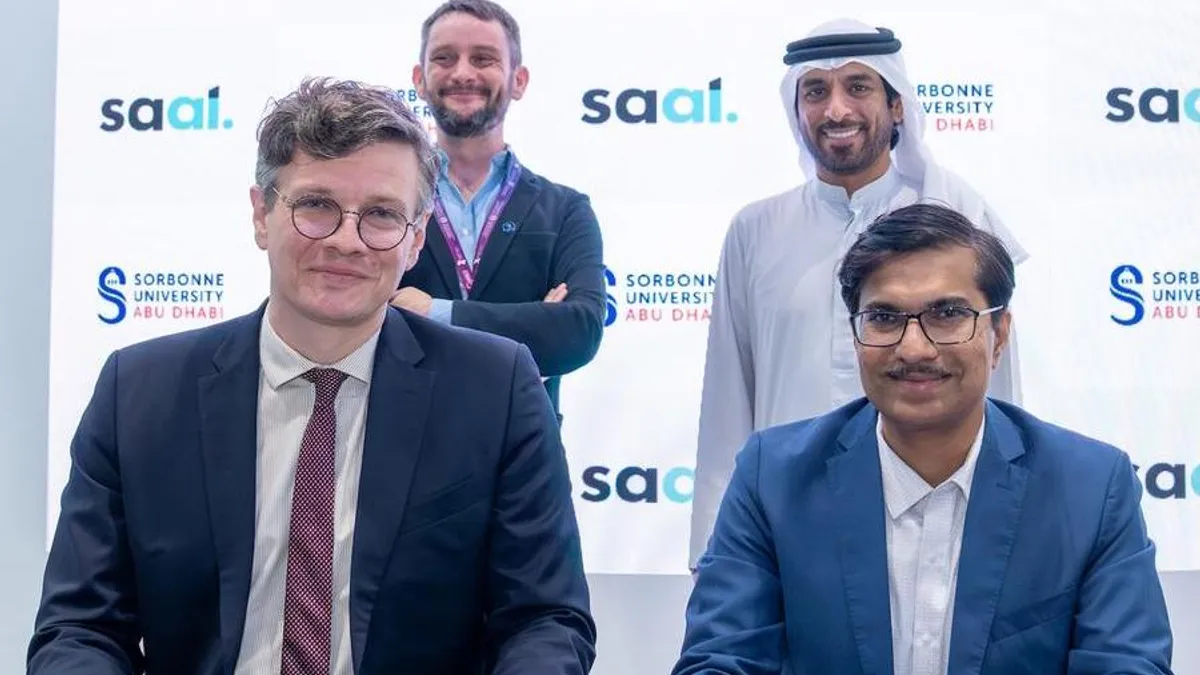
Sorbonne University Abu Dhabi and SAALAI Forge Strategic Alliance for AI Excellence In a landmark move for the Middle East’s tech landscape, Sorbonne University Abu Dhabi (SUAD) has officially entered into a strategic collaboration with SAALAI, a leading artificial intelligence research and development firm. This partnership aims to bridge the gap between academic excellence and industrial AI application, positioning the UAE as a global epicenter for ethical and innovative technology. The agreement focuses on fostering a robust ecosystem for AI research, providing students with cutting-edge resources, and developing AI solutions that align with the UAE’s National Strategy for Artificial Intelligence 2031.
Joint Research Initiatives: Collaborative projects focusing on high-impact AI applications. Talent Development: Enhanced internship and training programs for SUAD students at SAALAI. Ethical AI Frameworks: A shared commitment to developing responsible and culturally relevant AI models. Infrastructure Support: Leveraging SAALAI’s computational power alongside SUAD’s academic rigor.
Strengthening the UAE’s AI Ecosystem
The collaboration between SUAD and SAALAI is designed to be multi-faceted. By integrating SAALAI’s practical AI expertise with the theoretical foundations of one of the world’s most prestigious academic institutions, the partnership seeks to solve complex regional challenges. Professor Nathalie Martial-Braz, Vice-Chancellor of Sorbonne University Abu Dhabi, emphasized that this move ensures students are not just consumers of technology but creators of it. The initiative will likely involve “Sandboxing” new AI tools within the university environment before they are scaled for public or commercial use in Dubai and Abu Dhabi.
The Context: A Look at the Past
The UAE has long been a pioneer in the digital space. In 2017, the UAE became the first nation to appoint a Minister of State for Artificial Intelligence. Since then, educational institutions in Abu Dhabi have been under pressure to evolve. Previously, AI research in the region was often siloed within private tech hubs. This new agreement represents a shift toward the “Triple Helix” model—where government, academia, and industry work in unison. It follows a series of successful AI implementations in the UAE, such as the Falcon LLM and the integration of AI in smart city governance across Dubai.
Future Predictions: What Lies Ahead?
The synergy between SUAD and SAALAI is expected to yield significant results over the next decade: Localized AI Models: Expect the development of Arabic-centric Large Language Models (LLMs) that understand regional dialects and cultural nuances more deeply than current global models. Increased Tech FDI: This partnership will likely attract more international tech startups to the UAE, seeing the ready pipeline of highly skilled AI graduates.
Educational Evolution: We predict that SUAD will introduce specialized AI-integrated degrees, making AI a core component of even non-technical humanities courses, powered by SAALAI’s infrastructure.
Frequently Asked Questions
What is the main goal of the SUAD and SAALAI partnership?
The primary goal is to advance AI research, foster innovation, and provide students with the practical skills needed to lead the AI industry in the UAE.
How will this benefit students at Sorbonne University Abu Dhabi?
Students will gain access to internships, mentorship from AI experts, and hands-on experience with state-of-the-art AI development tools and datasets.
Does this support the UAE National AI Strategy?
Yes, it directly aligns with the UAE National Strategy for Artificial Intelligence 2031, which aims to make the UAE a world leader in AI by investing in people and industries.
Will the AI developed be ethical?
Both organizations have committed to prioritizing “Ethical AI,” ensuring that all innovations respect privacy, transparency, and cultural values.