DJI Faces Severe Market Restrictions as Beijing Enforces Drone Ban
📋 Key Takeaway: Beijing’s stringent new drone regulations, effective May 1, 2026, significantly hinder DJI’s operations, impacting the global drone market and raising security concerns.
New Regulations Transform Beijing’s Drone Market
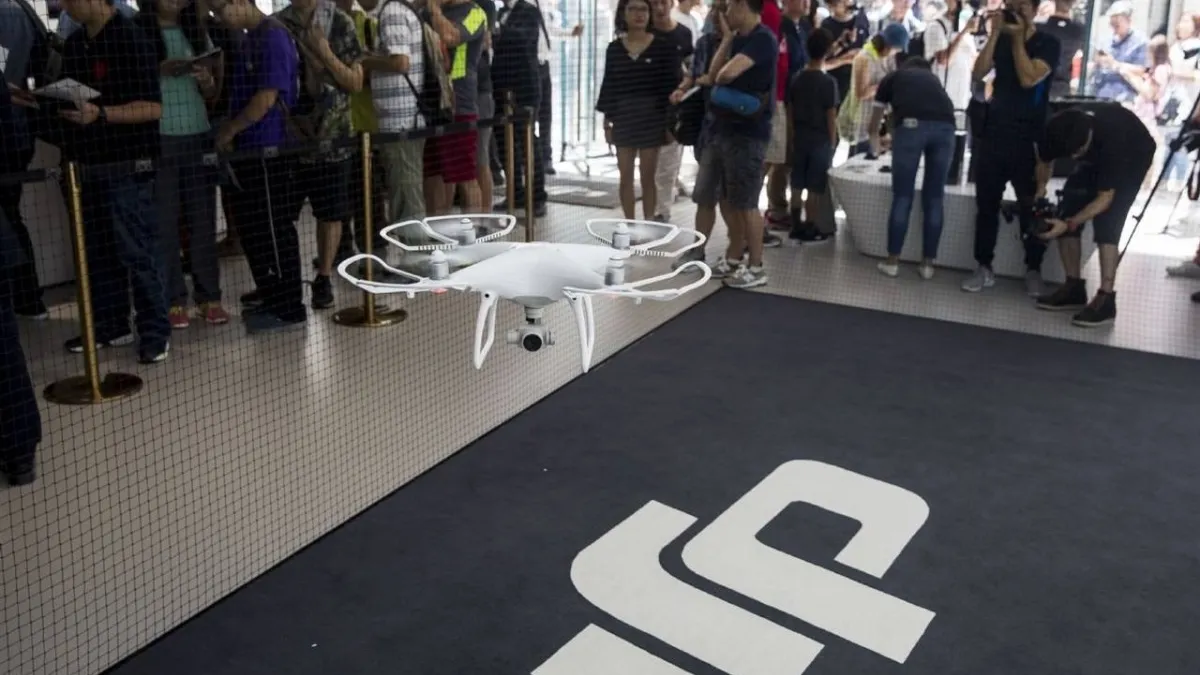
On May 1, 2026, Beijing implemented a sweeping ban on the sale, purchase, and operation of drones without prior security approval, effectively transforming the capital into a ‘black hole’ for drone activity. This regulatory shift has left the once-thriving DJI store in the heart of Beijing with empty display cases and no products to showcase. DJI, which commands a staggering 70% of the global drone market, is now unable to exhibit a single drone in its home city.
This drastic move is not merely an administrative adjustment but signifies a complete paralysis of the technology trade in the city. The ban reflects Beijing’s heightened national security concerns, overshadowing economic considerations for the world’s leading drone manufacturer. The implications are profound, as the city that once led the world in drone innovation now restricts its very lifeblood.
In the week leading up to the ban, a surge in purchases was observed as consumers rushed to acquire drones before the restrictions took effect. Zoe Zhao, a 44-year-old resident, managed to purchase a drone after a last-minute cancellation. However, her excitement was short-lived as she faced immediate registration requirements with local authorities and a complex security test via an official app, indicating that the skies are no longer free for enthusiasts.
Economic Consequences and Market Dynamics
The local drone ban coincides with increasing international pressures, particularly from the United States. Legal documents revealed in April 2026 indicated that U.S. restrictions on models such as the Air 3S and Mavic 3 Pro could cost DJI approximately $1.5 billion this year alone. This financial strain poses a significant threat to China’s aspirations for a low-altitude economy projected to be worth 3.5 trillion yuan (approximately $510 billion) by 2035, with anticipated revenues of 1.5 trillion yuan ($207 billion) in 2026.
The ban extends beyond operational limitations; it encompasses the entire technological ecosystem of drones. Importation of 17 essential components, such as motors and batteries, into Beijing now requires special permits, and maintenance centers have ceased operations, rendering any minor malfunction a potential death knell for a drone. This regulatory environment has forced drone enthusiasts like university student Steven Wang to relocate their equipment to neighboring Hebei province, where they encounter similarly stringent legal frameworks and prolonged wait times.
International Implications and Future Developments
The new regulations create a ‘gray area’ for international travelers passing through Beijing’s airports, as there are no guarantees regarding the safety of their devices from confiscation. Professor Huang Lixi from Hong Kong University notes that Beijing’s approach simplifies security by treating small drones (those weighing less than 249 grams) the same as large commercial aircraft, such as Boeing and Airbus, in terms of airworthiness requirements.
As July approaches, the industry awaits the mandatory airworthiness certification system, a pivotal moment that could redefine the landscape of drone operations globally. In addition to physical restrictions, Beijing has enforced a ‘digital fence’ requiring manufacturers to update drone firmware to include Remote ID capabilities. This system transmits the drone’s identity and operator’s location to the nearest police station upon engine activation, effectively eliminating anonymity in the skies over the capital.
The most significant shift will come in July when hobbyists must obtain an Airworthiness Certificate, a document previously reserved for commercial pilots. This certification mandates periodic technical inspections of every component of the drone, significantly increasing acquisition costs by hundreds of dollars due to registration and inspection fees. Many in the rights and technology sectors view this as an exorbitant barrier aimed at purging the skies of less affluent hobbyists.
DJI’s Legal Battle and Market Adaptations
Behind the scenes, DJI is engaged in a legal struggle that extends beyond the immediate financial losses. The company’s lawsuit against the U.S. Department of Defense, filed in April, has revealed a ‘blacklist’ that DJI is desperately trying to remove its name from. The freezing of its domestic market has placed the company in a precarious legal position on the international stage, complicating its defense of its products as ‘entirely peaceful’ in Washington while its home government enforces a ban citing national security concerns.
Despite the comprehensive restrictions, a nascent ‘alternative market’ for used drones is emerging in the outskirts of Beijing, where some individuals attempt to sell their devices outside of the digital regulations before the mandatory tracking system is enforced in July. However, stringent security measures, including monitoring of online second-hand sales platforms, have created an atmosphere where owning a drone feels akin to possessing an unlicensed weapon, resulting in a complete stagnation of buying and selling activities unseen in Beijing for a decade.
Frequently Asked Questions
What are the new drone regulations in Beijing?
Beijing has banned the sale, purchase, and operation of drones without prior security approval, effective May 1, 2026.
How does the drone ban affect DJI’s operations?
DJI, which holds 70% of the global drone market, is now unable to sell or showcase its products in Beijing.
What are the economic implications of the drone ban?
The ban is expected to cost DJI approximately $1.5 billion in losses this year and threaten China’s ambitions for a low-altitude economy.
What is the Airworthiness Certificate requirement?
Starting in July, hobbyists must obtain an Airworthiness Certificate, which requires technical inspections and increases the cost of owning a drone.
Is there a market for used drones in Beijing?
An alternative market for used drones is emerging, but strict security measures have led to a significant decline in buying and selling activities.