
UAE Leads Regional Consensus on Food Security Amid Iranian Disruptions
📋 Key Takeaway: The UAE, alongside GCC countries and others, has reached a consensus to address food security concerns exacerbated by Iranian actions disrupting global supply chains.
UAE’s Consensus Decision on Food Security
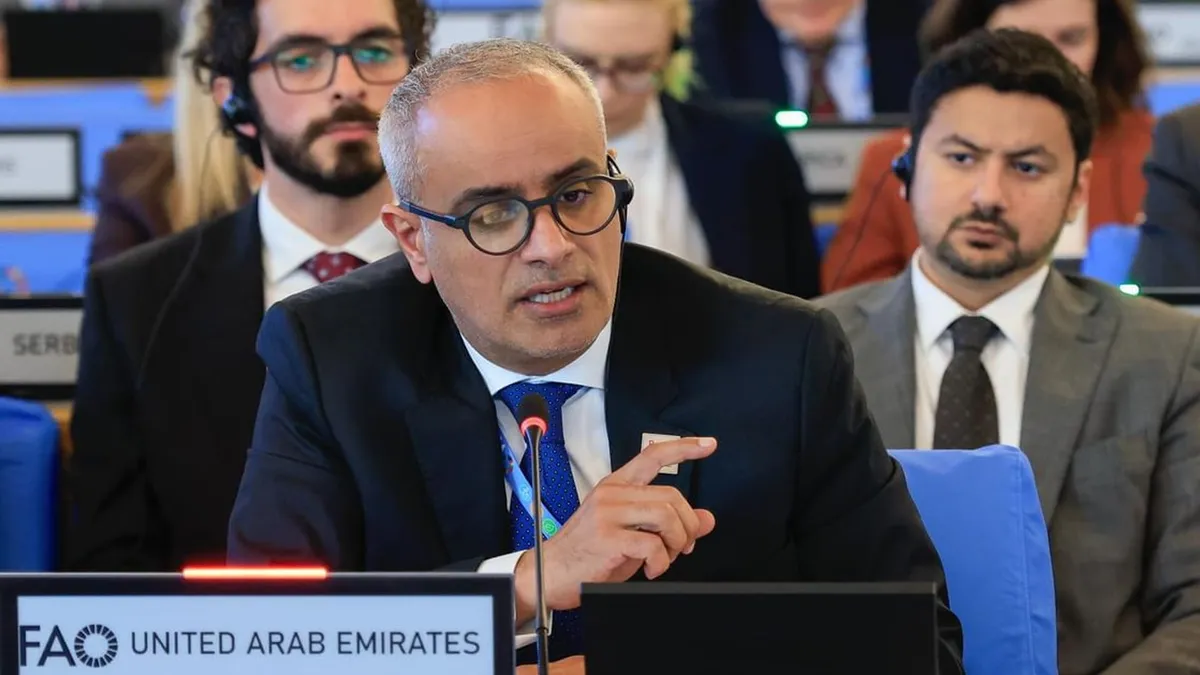
In a significant move to bolster global food security, the United Arab Emirates, in collaboration with Gulf Cooperation Council (GCC) nations, Jordan, Egypt, Lebanon, and Morocco, has adopted a consensus decision within the framework of the Food and Agriculture Organization (FAO). This initiative underscores the urgent need to prevent the politicization of food and agricultural supply chains, particularly for vulnerable countries reliant on food imports.
The UAE expressed gratitude to FAO Member States and Council members for their constructive engagement in advancing this initiative. The decision highlights the necessity of secure and predictable flows of food, fertilizers, and agricultural inputs, supported by open and well-functioning trade routes, to ensure global market stability and protect affected populations.
Iran’s Actions and Their Global Implications
The FAO decision also references United Nations Security Council Resolution 2817 (2026), co-sponsored by 136 countries, which condemns Iran’s attacks on regional nations and its threats to international navigation, particularly in the Strait of Hormuz. These actions are viewed as violations of international law and pose serious threats to global peace and security, disrupting the production, transport, and supply of food and agricultural commodities.
Abdulla Balalaa, Assistant Minister of Foreign Affairs for Energy and Sustainability, emphasized that the safety of global food and energy supply chains is intrinsically linked to the security of vital maritime routes. He warned that Iran’s escalatory actions targeting critical civilian infrastructure have far-reaching consequences that destabilize both the region and global markets, directly affecting vulnerable populations.
Call for Collective Action and Monitoring
The decision further emphasizes the importance of maintaining open and secure trade routes and ensuring freedom of navigation to guarantee the uninterrupted flow of essential goods, including food and fertilizers. It calls on the FAO to monitor and assess the impact of Iranian disruptions on global food security, providing timely market information and early warnings.
Additionally, the FAO is requested to assist member nations in strengthening the resilience of their agri-food systems. The UAE reiterated that the Strait of Hormuz serves as a crucial international waterway, vital for the flow of energy and trade, with approximately one-fifth of the world’s energy supplies and significant portions of global gas and fertilizer flows transiting through it daily.
Frequently Asked Questions
What is the significance of the UAE’s decision regarding food security?
The decision aims to prevent the politicization of food supply chains and safeguard global food security, particularly for vulnerable countries.
How do Iranian actions impact global food security?
Iran’s attacks disrupt food production and transport, contributing to market instability and food price volatility.
What role does the FAO play in this initiative?
The FAO is tasked with monitoring the impact of disruptions on food security and supporting member nations in enhancing their agri-food systems.
Why is the Strait of Hormuz considered vital?
It is a key international waterway through which a significant portion of the world’s energy supplies and essential goods transit daily.
What can be done to ensure the safety of maritime routes?
Collective international action is necessary to uphold international law and ensure freedom of navigation.