
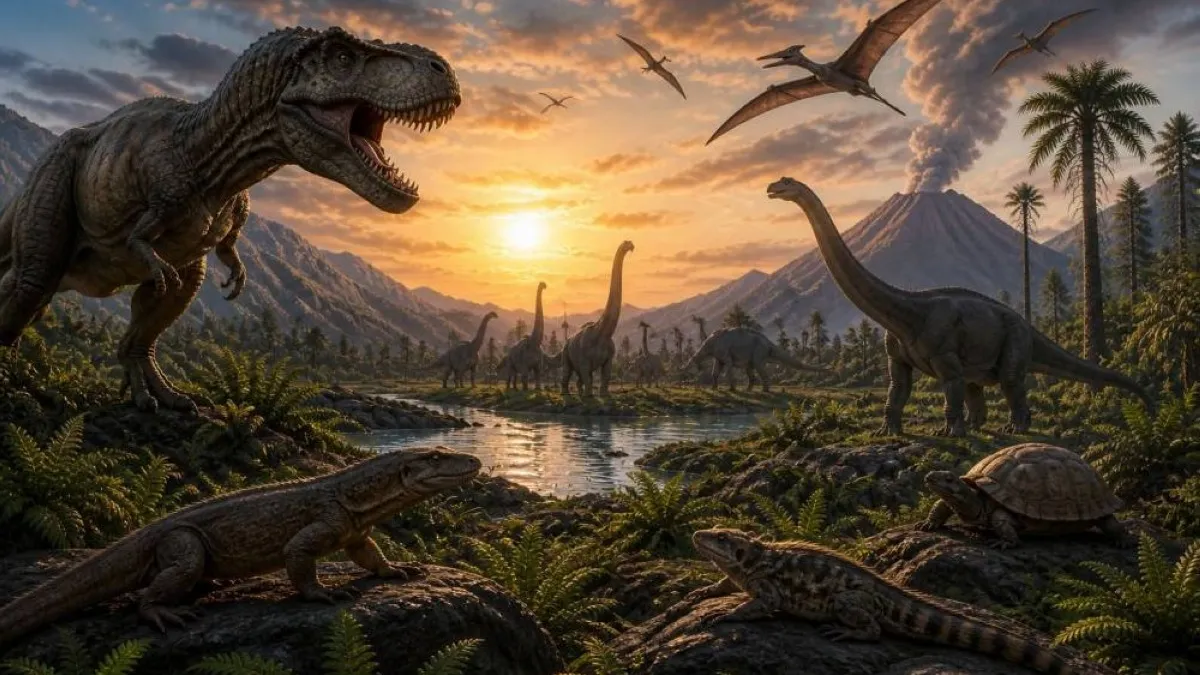
Research Links Human Lifespan to Ancient Dinosaur Era
📋 Key Takeaway: A groundbreaking theory posits that the human lifespan may be shaped by evolutionary pressures during the age of dinosaurs, offering new insights into aging and associated diseases.
The Bottleneck Theory of Longevity
A controversial new hypothesis from molecular biologist João Pedro de Magalhães at the University of Birmingham suggests that the human lifespan may be intricately linked to the survival strategies of early mammals during the reign of dinosaurs. Known as the ‘bottleneck theory of longevity,’ this concept posits that the first mammals faced constant threats from dinosaurs, which necessitated rapid reproduction over longevity.
In an environment fraught with danger, long lifespans were not an evolutionary advantage but rather a luxury that could not be afforded. Over millions of years, these survival pressures may have led to a biological pattern in mammals that prioritized quick reproduction instead of developing advanced mechanisms for cellular repair or lifespan extension.
Consequently, some genes responsible for cellular repair and aging deceleration may have diminished or become inactive, embedding these traits into the genetic makeup of modern humans. This theory raises profound questions about the evolutionary history that has shaped human aging.
Biological Evidence Supporting the Theory
Supporting this hypothesis are notable biological observations. Compared to certain reptiles and amphibians, mammals exhibit limited regenerative capabilities. For instance, crocodiles and some reptiles can continuously replace their teeth throughout their lives, while humans lose this ability permanently.
Additionally, some DNA repair mechanisms in mammals appear less efficient, potentially contributing to accelerated aging and the onset of age-related diseases. The loss of enzymes known as ‘photolyases,’ which repair damage from ultraviolet radiation, further illustrates this point. Researchers believe this loss is linked to the early mammals’ transition to a nocturnal lifestyle, reducing their exposure to sunlight and the necessity for such protective mechanisms.
Over time, humans have relied on external methods, such as sunscreen, to compensate for this biological deficiency. While humans are relatively long-lived compared to most mammals, alongside certain species like whales, this theory suggests that ancient evolutionary constraints may limit our potential for significantly longer lifespans.
Implications for Understanding Aging and Disease
The significance of this hypothesis extends beyond merely explaining aging; it also sheds light on associated diseases such as dementia, strokes, and possibly even cancer. Some of these ailments may directly result from biological mechanisms shaped under prehistoric survival pressures.
As research continues, these ideas open up profound inquiries into the connection between our evolutionary past and current health. The shadow of dinosaurs may still indirectly influence not only how we live but also the duration of our lives.
Frequently Asked Questions
What is the bottleneck theory of longevity?
It suggests that early mammals prioritized rapid reproduction over long lifespans due to threats from dinosaurs.
How does this theory relate to human aging?
It proposes that evolutionary pressures led to a decline in genes responsible for cellular repair, impacting human aging.
What biological evidence supports this theory?
Mammals lack advanced regenerative capabilities compared to reptiles, and certain DNA repair mechanisms are less efficient.
What diseases might be linked to this theory?
Aging-related diseases like dementia and cancer may be a result of ancient survival pressures.
How does this theory affect our understanding of health today?
It prompts questions about the relationship between our evolutionary history and current health challenges.